Edward de Vere, 17th Earl of Oxford
from Care and Disappointment, first published in Paradyse of Dainty Devices, 1576. Published by Grosart in Miscellanies of the Fuller Worthies' Library, Vol. IV (1872)
Poems
Edward de Vere, 17. hrabě z Oxfordu , byl příslušník anglické vysoké šlechty v době panování královny Alžběty I. V letech 1562 až 1603 byl dědičným nejvyšším komořím na královnině dvoře. Podle rozšířených spekulací je považován za skutečného autora většiny divadelních her a všech sonetů připisovaných Williamu Shakespearovi. Wikipedia
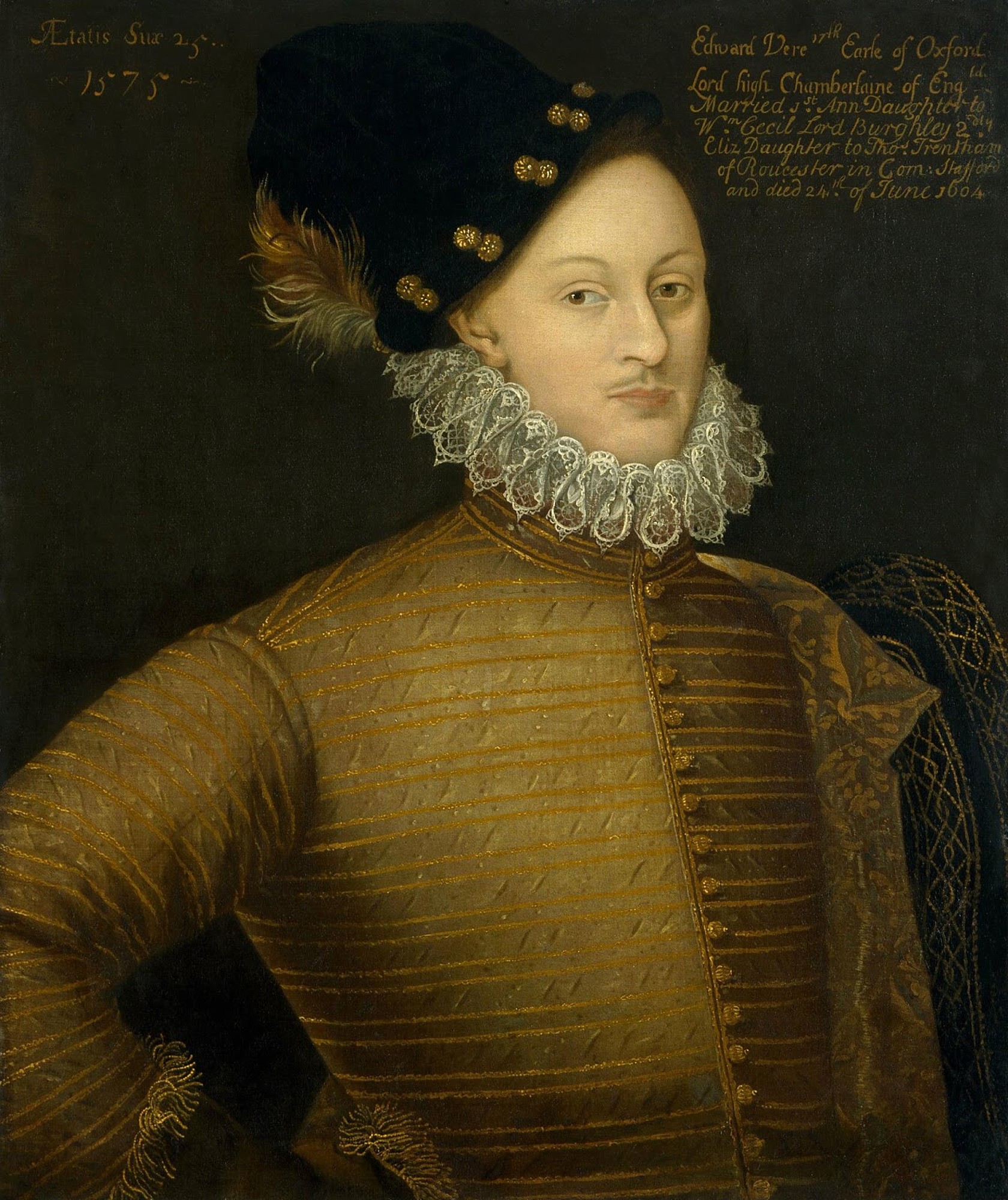
Edward de Vere, 17th Earl of Oxford
from Care and Disappointment, first published in Paradyse of Dainty Devices, 1576. Published by Grosart in Miscellanies of the Fuller Worthies' Library, Vol. IV (1872)
Poems
Edward de Vere, 17th Earl of Oxford
Poem "If women could be fair and yet not fond", also sometimes titled "Woman's Changeableness". According to Oxford specialist Steven May this is "possibly" by Oxford, but his authorship is not certain. It was printed in variant form as the work of Oxford in 1587, but attributed to "R.W." in the Harleian MS. A version was printed in Britons Bower of Delights (1591) attributed to Oxford.
Poems, Attributed
Edward de Vere, 17th Earl of Oxford
George Chapman, The Revenge of Bussy D'Ambois (2.4.84-95)
About
Edward de Vere, 17th Earl of Oxford
Attributed to Oxford by May, but also published as the work of Edward Dyer.
Poems, Attributed
“A valiant mind no deadly danger fears;”
Edward de Vere, 17th Earl of Oxford
From Reason and Affection. First published in Paradyse of Dainty Devices (1576), revised in the 1596 edition. It is also known as "Being in Love he complaineth". Published by Grosart in Miscellanies of the Fuller Worthies' Library, Vol. IV (1872)
Poems
Edward de Vere, 17th Earl of Oxford
Anecdote recorded by John Aubrey in Brief Lives (1693).
About
Edward de Vere, 17th Earl of Oxford
Zdroj: About, Lines attributed to Gabriel Harvey by Thomas Nashe, said to have been written to ridicule Oxford.