
“And hand in hand, on the edge of the sand,
They danced by the light of the moon.”
Edward Lear The Owl and the Pussycat
Zdroj: The Owl and the Pussycat
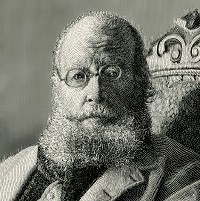
Edward Lear byl anglický ilustrátor a spisovatel, který proslul svými nonsensovými básněmi a tzv. „limeriky“ .
Narodil se v Highgate v Londýně jako předposlední dvacátý potomek zámožného makléře, a byl vychováván o 21 let starší sestrou Annou. Trpěl od mládí nepevným zdravím, od sedmi let měl záchvaty epilepsie, potíže dýchacích cest, na sklonku života částečně oslepl. Po otcově obchodním krachu se v patnácti musel se sestrou odstěhovat z domova. Sám se nikdy neoženil a vlastní děti neměl.
V devatenácti letech vydal knihu přírodopisných kreseb papoušků. Přes svůj trvající zájem a snahu o přírodopisné ilustrace se proslavil spíše jako spisovatel knížek pro děti. Ve dvaceti čtyřech letech mu vyšla jeho Velká kniha nesmyslů , sbírka limeriků, jež tuto krátkou básnickou formu proslavila. Celkem limeriků napsal přes dvě stě. Další známá básnická díla jsou Sedm rodin od jezera Piplpopl a báseň Sova a Kočička , kterou napsal pro děti svého mecenáše.
Do češtiny se zapsal hlavně díky překladům Antonína Přidala, Kniha třesků a plesků , Velká kniha nesmyslů , viz například následující limerik:
Byl jeden dědeček v Szegedu,
který jel na starém medvědu.
Když se ptali: „Kluše?“
Odpověděl suše:
„Je z rodu neklusavých medvědů.“Naposledy vyšel v roce 2004 v překladu Jana Vladislava Třesky, plesky, česky . Wikipedia
“And hand in hand, on the edge of the sand,
They danced by the light of the moon.”
Edward Lear The Owl and the Pussycat
Zdroj: The Owl and the Pussycat
Book of Nonsense http://www.gutenberg.org/dirs/etext97/nnsns10.txt, Limerick 1 (1846).
" The Jumblies http://www.nonsenselit.org/Lear/ns/jumblies.html", st. 1, in Nonsense Songs, Stories, Botany, and Alphabets (1871).
Edward Lear The Owl and the Pussycat
St. 3.
Zdroj: The Owl and the Pussycat (1871)
The Dong with the Luminous Nose http://www.nonsenselit.org/Lear/ll/dln.html, st. 1 (1877).
“They sailed away for a year and a day
To the land where the bong-tree grows.”
Edward Lear The Owl and the Pussycat
St. 2.
The Owl and the Pussycat (1871)
The Pobble Who Has No Toes http://www.nonsenselit.org/Lear/ll/pobble.html, st. 1 (1877).
St. 1. <br class="br"> The Courtship of the Yonghy-Bongy-Bò http://www.nonsenselit.org/Lear/ll/ybb.html (1877)
St. 5. <br class="br"> The Courtship of the Yonghy-Bongy-Bò http://www.nonsenselit.org/Lear/ll/ybb.html (1877)
St. 2. <br class="br"> The Courtship of the Yonghy-Bongy-Bò http://www.nonsenselit.org/Lear/ll/ybb.html (1877)
How Pleasant to Know Mr. Lear http://www.nonsenselit.org/Lear/pw/mrlear.html, st. 1 (1871).
But his shoes were far too tight. <br class="br"> Incidents in the Life of my Uncle Arly http://www.nonsenselit.org/Lear/pw/arly.html, st. 7 (1895).
The Quangle Wangle's Hat http://www.nonsenselit.org/Lear/ll/quangle.html, st. 1 (1877).
" The Jumblies http://www.nonsenselit.org/Lear/ns/jumblies.html", st. 1, in Nonsense Songs, Stories, Botany, and Alphabets (1871).
“Who, or why, or which, or what,
Is the Akond of Swat?”
The Akond of Swat http://www.nonsenselit.org/Lear/ll/akond.html, l. 1 (1877).
Calico Pie http://www.nonsenselit.org/Lear/ns/calico.html, st. 1 (1871).
“It's a fact the whole world knows,
That Pebbles are happier without their toes.”
The Pobble Who Has No Toes, st. 6.
The Pelican Chorus http://www.nonsenselit.org/Lear/ll/pelican.html, chorus (1877).
“"Dear pig, are you willing to sell for one shilling
Your ring?" Said the Piggy, "I will."”
Edward Lear The Owl and the Pussycat
St. 3.
The Owl and the Pussycat (1871)