“He disliked emotion, not because he felt lightly, but because he felt deeply.”
Pilgrim's Way (1940), p. 58
Memory Hold-The-Door (1940)
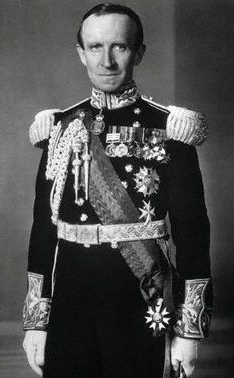
John Buchan byl skotský spisovatel, který se proslavil zejména špionážními romány, z nichž nejznámější je Třicet devět stupňů . Wikipedia
“He disliked emotion, not because he felt lightly, but because he felt deeply.”
Pilgrim's Way (1940), p. 58
Memory Hold-The-Door (1940)
“I have heard an atheist defined as a man who had no invisible means of support.”
A play on words commonly used referring to vagrants or paupers as having "no visible means of support" financially, speaking to the Law Society of Upper Canada, (21 February 1936); published in Canadian Occasions (1940), p. 201. Buchan's source for this definition remains unknown. The witticism was repeated by Harry Emerson Fosdick in his On Being a Real Person (1943), ch. 1, with due acknowledgement to Buchan, and was again used by Archbishop Fulton J. Sheen in Look magazine (December 14, 1955). The credit for this line is therefore often wrongly given to Fosdick or to Sheen. Credit has also been given to the conductor Walter Damrosch (1862-1950).
Canadian Occasions (1940)
Pilgrim's Way (1940), p. 241
Memory Hold-The-Door (1940)
“What can stand against loyalty? It is the faith that moves mountains.”
Zdroj: Midwinter (1923), Ch. X
John Buchan kniha The Path of the King
Zdroj: The Path of the King (1921), Ch. VIII "The Hidden City"
John Buchan kniha Huntingtower
Zdroj: Huntingtower (1922), Ch. 2
John Buchan kniha The Power-House
Zdroj: The Power-House (1916), Ch. 3 "Tells of a Midsummer Night"
Augustus (1937)
Memory Hold-The-Door (1940)
“The robe of flesh wears thin, and with the years God shines through all things.”
"The Wise Years", The Moon Endureth (1912)
John Buchan kniha The Power-House
Zdroj: The Power-House (1916), Ch. 1 "Beginning of the Wild-Goose Chase"
John Buchan kniha Prester John
Zdroj: Prester John (1910), Ch. X
John Buchan kniha Huntingtower
Zdroj: Huntingtower (1922), Ch. 9
John Buchan kniha The House of the Four Winds
Prologue
The House of the Four Winds (1935)
“Boldness, and still boldness, was the only wisdom. To be cautious was to be rash.”
Zdroj: Midwinter (1923), Ch. X
John Buchan kniha Salute to Adventurers
Zdroj: Salute to Adventurers (1915), Ch. 3 "The Canongate Tollbooth"
But I could see a hint of fear in his eyes.
Space (1912)
“Truth's like a dollar-piece, it's got two sides, and both are wanted to make it good currency.”
John Buchan kniha The Path of the King
Zdroj: The Path of the King (1921), Ch. XIV "The End of the Road", I
John Buchan kniha The Power-House
Zdroj: The Power-House (1916), Ch. 1 "Beginning of the Wild-Goose Chase"
“The best prayers have often more groans than words.”
This has also been attributed to Buchan, but is again from John Bunyan, Discourse on Prayer.
Misattributed
Space (1912)
John Buchan kniha The Power-House
Zdroj: The Power-House (1916), Ch. 1 "Beginning of the Wild-Goose Chase"
John Buchan kniha A Lodge in the Wilderness
Zdroj: A Lodge in the Wilderness (1906), Ch. III, p. 69
John Buchan kniha Huntingtower
Zdroj: Huntingtower (1922), Ch. 6
“We can pay our debts to the past by putting the future in debt to ourselves.”
Address to the people of Canada on the coronation of George VI (12 May 1937)
John Buchan kniha The Path of the King
Prologue
The Path of the King (1921)
This has similarly been attributed to Buchan, but is actually a misrendering of a sentence from the first paragraph of John Bunyan, Discourse on Prayer. Bunyan's original sentence reads: "It is the opener of the heart of God, and a means by which the soul, though empty, is filled."
Misattributed
Zdroj: Midwinter (1923), Ch. I


