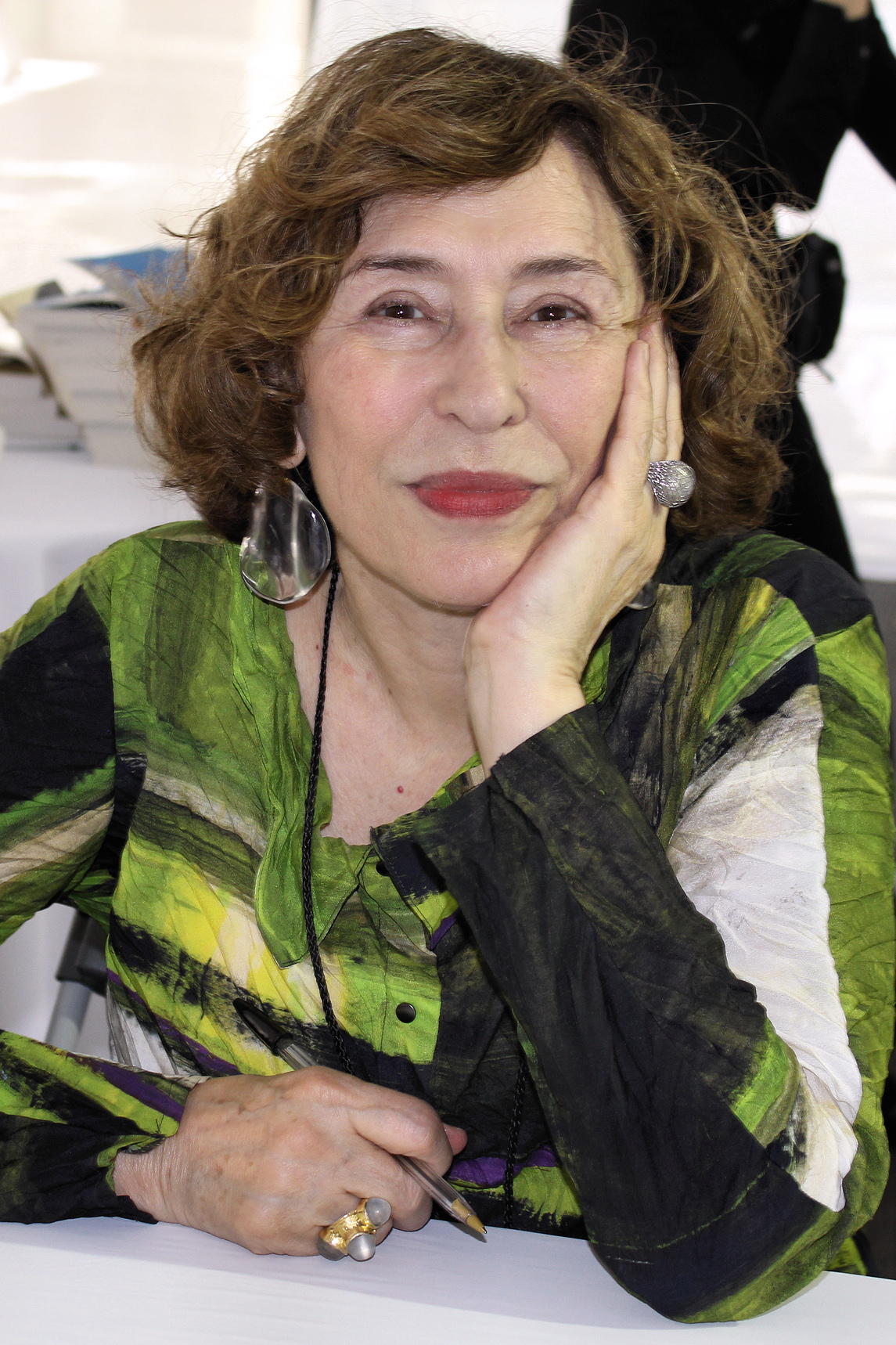
Azar Nafisiová citáty

Azar Nafisi je íránská spisovatelka a vysokoškolská profesorka anglické literatury.

Od roku 1997 žije ve Spojených státech amerických, kde pracuje jako profesorka literatury a estetiky na Johns Hopkins University ve Washingtonu. Přednášela rovněž v Oxfordu a na univerzitách v Íránu.

Kvůli odmítání povinného nošení šátku byla v 80. letech vyloučena z řad vyučujících na Teheránské univerzitě. Studenty pak učila na tajných setkáních u sebe doma. Wikipedia  

✵ 1. prosinec 1955  •  Další jména آذر نفیسی
Azar Nafisiová foto

Díla

Azar Nafisiová: 29 citátů3 lajky

Azar Nafisiová citáty a výroky

„Ve chvíli, kdy člověk přijde o všechny možnosti, začne i v té nejmenší skulince vidět velkolepou svobodu.“

Azar Nafisiová kniha Jak jsme v Teheránu četly Lolitu

Zdroj: [Lukavec, Jan, Nafisi, Azar: Jak jsme v Teheránu četly Lolitu (in MfD), iliteratura.cz, 2012-04-04, 2012-09-15, http://www.iliteratura.cz/Clanek/29793/nafisi-azar-jak-jsme-v-teheranu-cetly-lolitu-in-mfd]

Azar Nafisiová: Citáty anglicky

“The best fiction always forced us to question what we took for granted. It questioned traditions and expectations when they seemed too immutable.”

Azar Nafisi kniha Jak jsme v Teheránu četly Lolitu

Reading Lolita in Tehran (2003)
Kontext: I explained that most great works of the imagination were meant to make you feel like a stranger in your own home. The best fiction always forced us to question what we took for granted. It questioned traditions and expectations when they seemed too immutable. I told my students I wanted them in their readings to consider in what ways these works unsettled them, made them a little uneasy, made them look around and consider the world, like Alice in Wonderland, through different eyes.

“If you don't enter that world, hold your breath with the characters and become involved in their destiny, you won't be able to empathize, and empathy is at the heart of the novel.”

Azar Nafisi kniha Jak jsme v Teheránu četly Lolitu

Reading Lolita in Tehran (2003)
Kontext: A novel is not an allegory... It is the sensual experience of another world. If you don't enter that world, hold your breath with the characters and become involved in their destiny, you won't be able to empathize, and empathy is at the heart of the novel. This is how you read a novel: you inhale the experience. So start breathing.

“Every great work of art … is a celebration, an act of insubordination against the betrayals, horrors and infidelities of life.”

Azar Nafisi kniha Jak jsme v Teheránu četly Lolitu

Reading Lolita in Tehran (2003)
Kontext: Every great work of art... is a celebration, an act of insubordination against the betrayals, horrors and infidelities of life.

“Memories have ways of becoming independent of the reality they evoke. They can soften us against those we were deeply hurt by or they can make us resent those we once accepted and loved unconditionally.”

Azar Nafisi kniha Jak jsme v Teheránu četly Lolitu

Zdroj: Reading Lolita in Tehran (2003)
Kontext: As I trace the route to his apartment, the twists and turns, and pass once more the old tree opposite his house, I am struck by a sudden thought: memories have ways of becoming independent of the reality they evoke. They can soften us against those we were deeply hurt by or they can make us resent those we once accepted and loved unconditionally.

“It takes courage to die for a cause, but also to live for one.”

Azar Nafisi kniha Jak jsme v Teheránu četly Lolitu

Zdroj: Reading Lolita in Tehran

“Living in the Islamic Republic is like having sex with someone you loathe.”

Azar Nafisi kniha Jak jsme v Teheránu četly Lolitu

Zdroj: Reading Lolita in Tehran

“Reality has become so intolerable, she said, so bleak, that all I can paint now are the colors of my dreams.”

Azar Nafisi kniha Jak jsme v Teheránu četly Lolitu

Zdroj: Reading Lolita in Tehran

“Art is as useful as bread.”

Azar Nafisi kniha Jak jsme v Teheránu četly Lolitu

Zdroj: Reading Lolita in Tehran

“I am suddenly left alone again on the sunny path, with a memory of the rain.”

Azar Nafisi kniha Jak jsme v Teheránu četly Lolitu

Zdroj: Reading Lolita in Tehran

“Khatami is a symptom and not the cause of change in Iran.”

Azar Nafisi

"Mutually Assured Misunderstanding" at PBS.org, Interviews for Frontline (April 23 and May 2, 2002) http://www.pbs.org/wgbh/pages/frontline//shows/tehran/axis/nafisi.html

“This, I believe, is how the villain in modern fiction is born: a creature without compassion, without empathy.”

Azar Nafisi kniha Jak jsme v Teheránu četly Lolitu

Reading Lolita in Tehran (2003)

Podobní autoři

Marina Ivanovna Cvetajev foto
Marina Ivanovna Cvetajev8
ruská spisovatelka None
Patricie Holečková foto
Patricie Holečková56
česká spisovatelka None
Grazia Deledda foto
Grazia Deledda1
italská spisovatelka None
Colette foto
Colette22
francouzská spisovatelka None
Louise L. Hay foto
Louise L. Hay13
americká spisovatelka None
Selma Lagerlöf foto
Selma Lagerlöf7
švédská spisovatelka None
Daphne Du Maurier foto
Daphne Du Maurier8
britská spisovatelka None
Pearl S.  Buck foto
Pearl S. Buck21
americká spisovatelka None
Agatha Christie foto
Agatha Christie51
anglická spisovatelka None
Virginia Woolf foto
Virginia Woolf37
anglická spisovatelka None