Originál: (en) Every good mathematician is at least half a philosopher, and every good philosopher is at least half a mathematician.
Zdroj: [Sibley, Thomas Q., 2008, The Foundations of Mathematics, John Wiley & Sons, 21, angličtina]
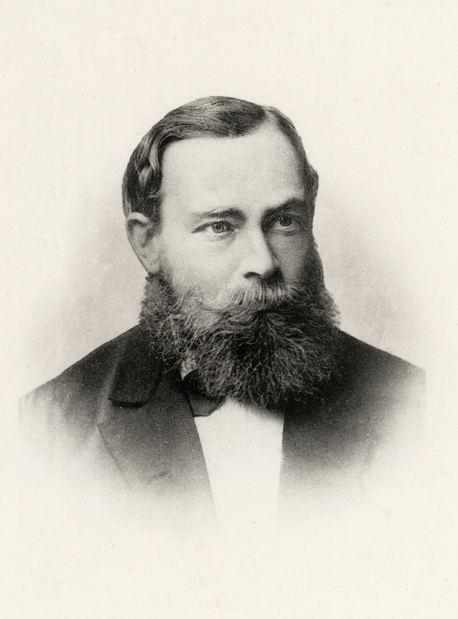
Gottlob Frege: 23 citátů2 lajky
Gottlob Frege citáty a výroky
Gottlob Frege: Citáty anglicky
Translation J. L. Austin (Oxford, 1950) as quoted by Stephen Toulmin, Human Understanding: The Collective Use and Evolution of Concepts (1972) Vol. 1, p. 56.
Grundgesetze der Arithmetik, 1893 and 1903
Gottlob Frege kniha Begriffsschrift
Begriffsschrift (1879) Preface to the Begriffsschrift
Introduction, Tr. Montgomery Furth (1964)
Grundgesetze der Arithmetik, 1893 and 1903
Gottlob Frege Sense and reference
Gottlob Frege (1892). On Sense and Reference.
Über Sinn und Bedeutung, 1892
Gottlob Frege in: Dagobert David Runes (1962). Readings in epistemology, theory of knowledge and dialectics. p. 334
Gottlob Frege Sense and reference
As cited in: M. Fitting, Richard L. Mendelsoh (1999), First-Order Modal Logic, p. 142. They called this Frege's Puzzle.
Über Sinn und Bedeutung, 1892
Note in the appendix of Grundlagen der Arithmetik (Vol. 2) after Frege had received a letter of Bertrand Russell in which Russell had explained his discovery of, what is now known as, Russell's paradox.
Grundgesetze der Arithmetik, 1893 and 1903
Gottlob Frege, Montgomery Furth (1964). The Basic Laws of Arithmetic: Exposition of the System. p. 10
Vol. 2, p. 127. Replying to Bertrand Russell's letter about Russell's Paradox; quoted in The Stanford Encyclopedia of Philosophy http://plato.stanford.edu/entries/russell-paradox/ <br class="br">Grundgesetze der Arithmetik, 1893 and 1903
Vol. 1. pp. 137-140, as cited in: Ralph H. Johnson (2012), Manifest Rationality: A Pragmatic Theory of Argument, p. 87
Grundgesetze der Arithmetik, 1893 and 1903
Gottlob Frege (1956). "The thought: A logical inquiry" in: Peter Ludlow (1997) Readings in the Philosophy of Language. p. 27
“A judgment, for me is not the mere grasping of a thought, but the admission of its truth.”
Gottlob Frege Sense and reference
Gottlob Frege (1892). On Sense and Reference, note 7.
Über Sinn und Bedeutung, 1892
paraphrasing Frege's Begriffsschrift, a formula language, modeled upon that of arithmetic, for pure thought (1879) in Jean Van Heijenoort ed., in From Frege to Gödel: A Source Book in Mathematical Logic, 1879-1931 (1967)
Translation J. L. Austin (Oxford, 1950) as quoted by Stephen Toulmin, Human Understanding: The Collective Use and Evolution of Concepts (1972) Vol. 1, p. 56.
Grundgesetze der Arithmetik, 1893 and 1903
Translation J. L. Austin (Oxford, 1950) as quoted by Stephen Toulmin, Human Understanding: The Collective Use and Evolution of Concepts (1972) Vol. 1, p. 55.
Grundgesetze der Arithmetik, 1893 and 1903
Nur im Zusammenhange eines Satzes bedeuten die Wörter etwas. Es wird also darauf ankommen, den Sinn eines Satzes zu erklären, in dem ein Zahlwort vorkommt.
Gottlob Frege (1950 [1884]). p. 73
Attributed to Frege in: A. A. B. Aspeitia (2000), Mathematics as grammar: 'Grammar' in Wittgenstein's philosophy of mathematics during the Middle Period, Indiana University, p. 25
Gottlob Frege kniha The Foundations of Arithmetic
Gottlob Frege (1950 [1884]). The Foundations of Arithmetic. p. 99.
"Letter to Bertrand Russel" (1902) in J. van Heijenoort, ed., From Frege to Godel: A Source Book in Mathematical Logic, 1879-1931 (1967)
Gottlob Frege Sense and reference
The discovery that the rising sun is not new every morning, but always the same, was one of the most fertile astronomical discoveries. Even to-day the identification of a small planet or a comet is not always a matter of course. Now if we were to regard equality as a relation between that which the names 'a' and 'b' designate, it would seem that a = b could not differ from a = a (i.e. provided a = b is true). A relation would thereby be expressed of a thing to itself, and indeed one in which each thing stands to itself but to no other thing.
As cited in: M. Fitting, Richard L. Mendelsoh (1999), First-Order Modal Logic, p. 142. They called this Frege's Puzzle.
Über Sinn und Bedeutung, 1892
Gottlob Frege kniha The Foundations of Arithmetic
Arithmetic thus becomes simply a development of logic, and every proposition of arithmetic a law of logic, albeit a derivative one. To apply arithmetic in the physical sciences is to bring logic to bear on observed facts; calculation becomes deduction.
Gottlob Frege (1950 [1884]). The Foundations of Arithmetic. p. 99.
Originál: (de) Ein Philosoph, der keine Beziehung zur Geometrie hat, ist nur ein halber Philosoph, und ein Mathematiker, der keine philosophische Ader hat, ist nur ein halber Mathematiker.
Gottlob Frege: Erkenntnisquellen der Mathematik und der mathematischen Naturwissenschaften, 1924/1925, submitted to Wissenschaftliche Grundlagen; posthumously published in: Frege, Gottlob: Nachgelassene Schriften und Wissenschaftlicher Briefwechsel. Felix Meiner Verlag, 1990, p. 293


