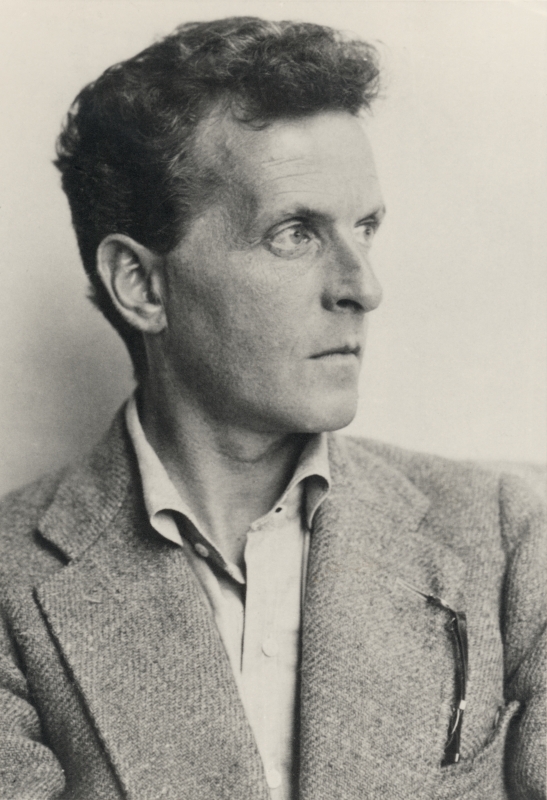
Ludwig Wittgenstein nejznámější citáty

Ludwig Wittgenstein citáty a výroky
Zdroj: Konrad Paul Liessmann: Teorie nevzdělanosti, Academia 2009
„Řešení problému života pozorujeme na tom, že tento problém zmizí.“
Ludwig Wittgenstein kniha Tractatus logico-philosophicus
Tractatus Logico-Philosophicus
„Člověk se musí probudit k údivu – a národy možná také. Věda je způsob, jak je zase poslat spát.“
Wittgenstein Culture and value, str. 5.
Ludwig Wittgenstein: Citáty anglicky
Attributed from posthumous publications
“I act with complete certainty. But this certainty is my own.”
Ludwig Wittgenstein kniha On Certainty
Zdroj: On Certainty
Ludwig Wittgenstein kniha Tractatus logico-philosophicus
Zdroj: Tractatus Logico-Philosophicus
“253. At the core of all well-founded belief, lies belief that is unfounded.”
Ludwig Wittgenstein kniha On Certainty
Zdroj: On Certainty (1969)
Ludwig Wittgenstein kniha Tractatus logico-philosophicus
Zdroj: Tractatus Logico-Philosophicus
“The world of the happy is quite different from the world of the unhappy.”
6.43
Die Welt des Glücklichen ist eine andere als die des Unglücklichen
1920s, Tractatus Logico-Philosophicus (1922)
“Ethics and aesthetics are one.”
Ludwig Wittgenstein kniha Tractatus logico-philosophicus
Zdroj: Tractatus Logico-Philosophicus
It happened like this: the grown-up had drawn pictures for the child several times and said "this is a man," "this is a house," etc. And then the child makes some marks too and asks: what's this then? p. 17e
Ref: en.wikiquote.org - Ludwig Wittgenstein / Quotes / Culture and Value (1980)
1930s-1951, Philosophical Occasions 1912-1951 (1993)
Zdroj: Philosophical Occasions: 1912-1951
Ludwig Wittgenstein kniha Tractatus logico-philosophicus
Zdroj: Tractatus Logico-Philosophicus
Ludwig Wittgenstein kniha Philosophical Investigations
Zdroj: Philosophical Investigations
“Logic takes care of itself; all we have to do is to look and see how it does it.”
Journal entry (13 October 1914), also in Tractatus Logico-Philosophicus (§ 5.47)
1910s, Notebooks 1914-1916
Ludwig Wittgenstein kniha Tractatus logico-philosophicus
Zdroj: Tractatus Logico-Philosophicus
Ludwig Wittgenstein kniha Philosophical Investigations
Pt II, p. 162
Philosophical Investigations (1953)
Kontext: One can mistrust one's own senses, but not one's own belief.
If there were a verb meaning "to believe falsely," it would not have any significant first person, present indicative.
“One often makes a remark and only later sees how true it is.”
Journal entry (11 October 1914), p. 10e
1910s, Notebooks 1914-1916
Ludwig Wittgenstein kniha Tractatus logico-philosophicus
Zdroj: Tractatus Logico-Philosophicus
“Tell them I've had a wonderful life.”
Last words, to his doctor's wife (28 April 1951)–as quoted in Ludwig Wittgenstein : A Memoir (1966) by Norman Malcolm, p. 100
1930s-1951
Ludwig Wittgenstein kniha Philosophical Investigations
§ 217
Zdroj: Philosophical Investigations (1953)
“378. Knowledge is in the end based on acknowledgement.”
Ludwig Wittgenstein kniha On Certainty
On Certainty (1969)


