„Emigrace ke v mnoha směrech stimulující… V cizině prostě musíte excelovat.“
Zdroj: [2011, Sto českých vědců v exilu, Academia, Praha, 1, 19, čeština, 978-80-200-1915-8]
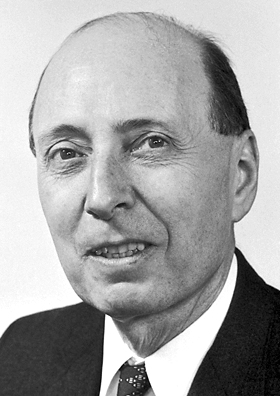
Eugene Paul Wigner byl americký fyzik židovského původu, nositel Nobelovy ceny za fyziku.
Nobelovu cenu získal „za příspěvky k teorii atomového jádra a elementárních částic, zejména za objev základních principů symetrie a jejich aplikace v praxi.“ Ve světě fyziků byl někdy označovaný jako tichý génius a někteří z jeho současníků ho přirovnávali k Einsteinovi.
Wigner byl jedním z těch fyziků, kteří v 20. létech minulého století přetvořili fyziku. První fyzici z této generace: Werner Heisenberg, Erwin Schrödinger a Paul Dirac vytvořili kvantovou mechaniku. Byl to úplně nový, oslnivý svět, který však otevřel mnoho nových základních otázek. Následovali je další, aby této otázky zodpovídali a aby nastolili otázky ještě složitější.
Wigner patřil k druhé skupině těchto vědců. Zavedl pojem symetrií do kvantové mechaniky, v 30. létech rozšířil svůj výzkum na atomová jádra. V letech 1939 až 1945 tato generace pomohla přetvořit svět.
Wigner patřil do skupiny známých maďarsko-židovských fyziků a matematiků z Budapešti. Patřili sem Paul Erdős, Edward Teller, John von Neumann, a Leó Szilárd. Jejich američtí kolegové je kvůli jejich jakoby „nadpozemským“ schopnostem přezdívali „The Martians“ . Szilárd byl nejlepším přítelem Wignera v dospělosti. Neumann byl Wignerův spolužák a rádce, o kterém později Wigner napsal: „byl to nejmoudřejší člověk, jakého jsem na Zemi poznal.“ E. P.Wigner byl však z nich jediný, kdo získal Nobelovu cenu. Wikipedia
„Emigrace ke v mnoha směrech stimulující… V cizině prostě musíte excelovat.“
Zdroj: [2011, Sto českých vědců v exilu, Academia, Praha, 1, 19, čeština, 978-80-200-1915-8]
Biographical memoir: "John von Neumann (1903 - 1957)" in Year book of the American Philosophical Society (1958); later in Symmetries and Reflections : Scientific Essays of Eugene P. Wigner (1967), p. 261
Kontext: A deep sense of humor and an unusual ability for telling stories and jokes endeared Johnny even to casual acquaintances. He could be blunt when necessary, but was never pompous. A mind of von Neumann's inexorable logic had to understand and accept much that most of us do not want to accept and do not even wish to understand. This fact colored many of von Neumann's moral judgments. "It is just as foolish to complain that people are selfish and treacherous as it is to complain that the magnetic field does not increase unless the electric field has a curl. Both are laws of nature." Only scientific intellectual dishonesty and misappropriation of scientific results could rouse his indignation and ire — but these did — and did almost equally whether he himself, or someone else, was wronged.
Biographical memoir: "John von Neumann (1903 - 1957)" in Year book of the American Philosophical Society (1958); later in Symmetries and Reflections : Scientific Essays of Eugene P. Wigner (1967), p. 261
Kontext: A deep sense of humor and an unusual ability for telling stories and jokes endeared Johnny even to casual acquaintances. He could be blunt when necessary, but was never pompous. A mind of von Neumann's inexorable logic had to understand and accept much that most of us do not want to accept and do not even wish to understand. This fact colored many of von Neumann's moral judgments. "It is just as foolish to complain that people are selfish and treacherous as it is to complain that the magnetic field does not increase unless the electric field has a curl. Both are laws of nature." Only scientific intellectual dishonesty and misappropriation of scientific results could rouse his indignation and ire — but these did — and did almost equally whether he himself, or someone else, was wronged.
Eugene Paul Wigner The Unreasonable Effectiveness of Mathematics in the Natural Sciences
"The Unreasonable Effectiveness of Mathematics in the Natural Sciences," Communications in Pure and Applied Mathematics, February 1960.
in an interview by [István Kardos, Scientists face to face, Corvina Kiadó, 1978, 963130373X, 370]
“Where in the Schrödinger equation do you put the joy of being alive?”
As quoted by Freeman Dyson from a private conversation, Infinite in All Directions (1988)
Eugene Paul Wigner The Unreasonable Effectiveness of Mathematics in the Natural Sciences
"The Unreasonable Effectiveness of Mathematics in the Natural Sciences," Communications in Pure and Applied Mathematics, February 1960, final sentence.


