Tento překlad čeká na kontrolu. Je překlad správně?
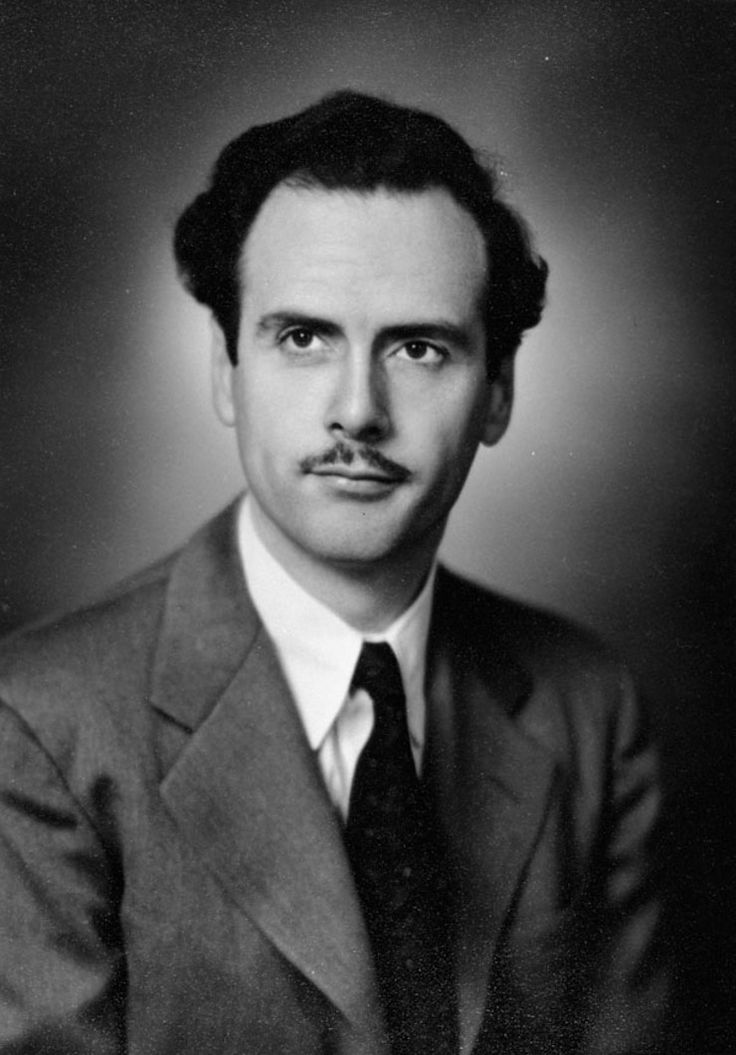
Marshall McLuhan: 420 citátů4 lajky
Marshall McLuhan nejznámější citáty
„Kriminálník, stejně jako umělec, je sociální průzkumník.“
Originál: (en) The criminal, like the artist, is a social explorer.
Zdroj: [WHITMAN, ALDEN, Marshall McLuhan, Author, Dies; Declared 'Medium Is the Message', nytimes.com, 1981-01-01, 201-12-06, https://www.nytimes.com/books/97/11/02/home/mcluhan-obit.html]
Marshall McLuhan: Citáty anglicky
“There are no passengers on Spaceship Earth. We are all crew.”
Statement in 1965, in reference to Operating Manual for Spaceship Earth (1963) by Buckminster Fuller, as quoted Paradigms Lost: Learning from Environmental Mistakes, Mishaps and Misdeeds (2005) by Daniel A. Vallero, p. 367
1960s
Letters of Marshall McLuhan (1987), p. 413
1980s and later
Kontext: I am not a "culture critic" because I am not in any way interested in classifying cultural forms. I am a metaphysician, interested in the life of the forms and their surprising modalities. That is why I have no interest in the academic world.
“A point of view can be a dangerous luxury when substituted for insight and
understanding.”
Marshall McLuhan kniha The Gutenberg Galaxy
Zdroj: The Gutenberg Galaxy: The Making of Typographic Man
Zdroj: 1990s and beyond, The Book of Probes : Marshall McLuhan (2011), p. 99
Zdroj: 1960s, The Gutenberg Galaxy (1962), p. 263
“Scribal culture and Gothic architecture were both concerned with light through, not light on.”
Zdroj: 1960s, The Gutenberg Galaxy (1962), p. 120
“A nomadic society cannot experience enclosed space.”
Marshall McLuhan kniha The Gutenberg Galaxy
Zdroj: The Gutenberg Galaxy (1962), p. 73
“Only a fraction of the history of literacy has been typographic.”
Marshall McLuhan kniha The Gutenberg Galaxy
Zdroj: The Gutenberg Galaxy (1962), p. 84
Letter to Harold Adam Innis (14 March 1951), published in Essential McLuhan (1995), edited by Eric McLuhan and Frank Zingrone, p. 74
1950s
Zdroj: 1960s, Counterblast (1969), p. 5
“There is nothing willful or arbitrary about the Innis mode of expression.”
Marshall McLuhan kniha The Gutenberg Galaxy
Zdroj: The Gutenberg Galaxy (1962), p. 216; this paragraph was quoted as "context (0) - THE INNIS MODE" by John Brunner, the epigraph or first chapter in his novel Stand on Zanzibar (1968)
Kontext: There is nothing willful or arbitrary about the Innis mode of expression. Were it to be translated into perspective prose, it would not only require huge space, but the insight into the modes of interplay among forms of organisation would also be lost. Innis sacrificed point of view and prestige to his sense of the urgent need for insight. A point of view can be a dangerous luxury when substituted for insight and understanding. As Innis got more insight he abandoned any mere point of view in his presentation of knowledge. When he interrelates the development of the steam press with 'the consolidation of the vernaculars' and the rise of nationalism and revolution he is not reporting anybody's point of view, least of all his own. He is setting up a mosaic configuration or galaxy for insight … Innis makes no effort to "spell out" the interrelations between the components in his galaxy. He offers no consumer packages in his later work, but only do-it-yourself kits...
Marshall McLuhan kniha Understanding Media: The Extensions of Man
Understanding Media (1964)
Kontext: Radio affects most intimately, person-to-person, offering a world of unspoken communication between writer-speaker and the listener. That is the immediate aspect of radio. A private experience. The subliminal depths of radio are charged with the resonating echoes of tribal horns and antique drums. This is inherent in the very nature of this medium, with its power to turn the psyche and society into a single echo chamber. (p. 261)
“Schizophrenia may be a necessary consequence of literacy.”
Marshall McLuhan kniha The Gutenberg Galaxy
Zdroj: The Gutenberg Galaxy (1962), p. 26
“The global village is a place of very arduous interfaces and very abrasive situations.”
1970s, The Education of Mike McManus, TVOntario, December 28 1977
“Only puny secrets need protection. Big secrets are protected by public incredulity.”
Take Today : The Executive as Dropout (1972)
Kontext: Only puny secrets need protection. Big secrets are protected by public incredulity. You can actually dissipate a situation by giving it maximal coverage. As to alarming people, that's done by rumours, not by coverage. (p. 92)
“I do not say whether it is a good or bad thing. To do so would be meaningless and arrogant.”
Letter to Robert Fulford, 1964. Letters of Marshall McLuhan (1987), p. 300
1960s
Kontext: My main theme is the extension of the nervous system in the electric age, and thus, the complete break with five thousand years of mechanical technology. This I state over and over again. I do not say whether it is a good or bad thing. To do so would be meaningless and arrogant.
Marshall McLuhan kniha The Gutenberg Galaxy
Zdroj: The Gutenberg Galaxy (1962), p. 186
“In antiquity and the Middle Ages reading was necessarily reading aloud.”
Marshall McLuhan kniha The Gutenberg Galaxy
Zdroj: The Gutenberg Galaxy (1962), p. 94
“Everybody tends to merge his identity with other people at the speed of light.”
It's called being mass man.
1970s, The Education of Mike McManus, TVOntario, December 28 1977
“Innis sacrificed point of view and prestige to his sense of the urgent need for insight.”
Marshall McLuhan kniha The Gutenberg Galaxy
Zdroj: The Gutenberg Galaxy (1962), p. 216; this paragraph was quoted as "context (0) - THE INNIS MODE" by John Brunner, the epigraph or first chapter in his novel Stand on Zanzibar (1968)
Kontext: There is nothing willful or arbitrary about the Innis mode of expression. Were it to be translated into perspective prose, it would not only require huge space, but the insight into the modes of interplay among forms of organisation would also be lost. Innis sacrificed point of view and prestige to his sense of the urgent need for insight. A point of view can be a dangerous luxury when substituted for insight and understanding. As Innis got more insight he abandoned any mere point of view in his presentation of knowledge. When he interrelates the development of the steam press with 'the consolidation of the vernaculars' and the rise of nationalism and revolution he is not reporting anybody's point of view, least of all his own. He is setting up a mosaic configuration or galaxy for insight … Innis makes no effort to "spell out" the interrelations between the components in his galaxy. He offers no consumer packages in his later work, but only do-it-yourself kits...
“The hardware world tends to move into software form at the speed of light.”
1970s, The Education of Mike McManus, TVOntario, December 28 1977
Marshall McLuhan kniha The Gutenberg Galaxy
Zdroj: The Gutenberg Galaxy (1962), p. 216; this paragraph was quoted as "context (0) - THE INNIS MODE" by John Brunner, the epigraph or first chapter in his novel Stand on Zanzibar (1968)
Kontext: There is nothing willful or arbitrary about the Innis mode of expression. Were it to be translated into perspective prose, it would not only require huge space, but the insight into the modes of interplay among forms of organisation would also be lost. Innis sacrificed point of view and prestige to his sense of the urgent need for insight. A point of view can be a dangerous luxury when substituted for insight and understanding. As Innis got more insight he abandoned any mere point of view in his presentation of knowledge. When he interrelates the development of the steam press with 'the consolidation of the vernaculars' and the rise of nationalism and revolution he is not reporting anybody's point of view, least of all his own. He is setting up a mosaic configuration or galaxy for insight … Innis makes no effort to "spell out" the interrelations between the components in his galaxy. He offers no consumer packages in his later work, but only do-it-yourself kits...
Marshall McLuhan kniha The Gutenberg Galaxy
Zdroj: The Gutenberg Galaxy (1962), p. 280
“Typographic man can express but is helpless to read the configurations of print technology.”
Marshall McLuhan kniha The Gutenberg Galaxy
Zdroj: The Gutenberg Galaxy (1962), p. 245
“Media are means of extending and enlarging our organic sense lives into our environment.”
"The Care and Feeding of Communication Innovation", Dinner Address to Conference on 8 mm Sound Film and Education, Teachers College, Columbia University, 8 November 1961
1960s
Marshall McLuhan kniha The Gutenberg Galaxy
Zdroj: The Gutenberg Galaxy (1962), p. 230
“Nobody ever made a grammatical error in a non-literate society.”
Marshall McLuhan kniha The Gutenberg Galaxy
Zdroj: The Gutenberg Galaxy (1962), p. 271
1970s, The Education of Mike McManus, TVOntario, December 28 1977
Marshall McLuhan kniha The Gutenberg Galaxy
Zdroj: The Gutenberg Galaxy (1962), p. 220
“The new electronic interdependence recreates the world in the image of a global village.”
Marshall McLuhan kniha The Gutenberg Galaxy
The Gutenberg Galaxy (1962)
Kontext: The new electronic interdependence recreates the world in the image of a global village. (p. 36)


