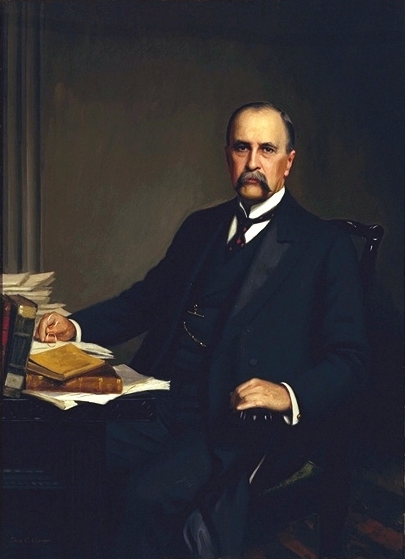
William Osler nejznámější citáty
Zdroj: [Kalendárium, ceskatelevize.cz, 2011-03-21, http://www.ceskatelevize.cz/porady/1095927644-kalendarium/3153-vyhledavani/?searchType=date&kMonth=12&kDay=30]
William Osler: Citáty anglicky
“One of the first duties of the physician is to educate the masses not to take medicine.”
Zdroj: Sir William Osler : Aphorisms (1961), p. 105.
“We are here to add what we can to, not to get what we can from, Life.”
Vol. I, ch. 14.
The Life of Sir William Osler (1925)
“The greater the ignorance the greater the dogmatism.”
Chauvinism in Medicine (1902), p. 696
“The best preparation for tomorrow is to do today's work superbly well.”
As quoted in Lifetime Speaker's Encyclopedia (1962) by Jacob Morton Braude, p. 575.
As quoted in The Book of Unusual Quotations (1957) by Rudolf Franz Flesch, p. 122.
"Teaching and Thinking" in The Montreal Medical Journal (1895).
“We may indeed be justly proud of our apostolic succession.”
Chauvinism in Medicine (1902)
Kontext: We may indeed be justly proud of our apostolic succession. Schools and systems have flourished and gone, schools which have swayed for generations the thought of our guild, and systems that have died before their founders; the philosophies of one age have become the absurdities of the next, and the foolishness of yesterday has become the wisdom of to-morrow; through long ages which were slowly learning what we are hurrying to forget — amid all the changes and chances of twenty-five centuries, the profession has never lacked men who have lived up to these Greek ideals. <!-- p. 628
Science and Immortality (1904)
Kontext: Though his philosophy finds nothing to support it, at least from the standpoint of Terence the scientific student should be ready to acknowledge the value of a belief in a hereafter as an asset in human life. In the presence of so many mysteries which have been unveiled, in the presence of so many yet unsolved, he cannot be dogmatic and deny the possibility of a future state; and however distressing such a negative attitude of mind to the Teresian, like Pyrrho, he will ask to be left, reserving his judgement, but still inquiring. He will recognize that amid the turbid ebb and flow of human misery, a belief in the resurrection of the dead and the life of the world to come is the rock of safety to which many of the noblest of his fellows have clung; he will gratefully accept the incalculable comfort of such a belief to those sorrowing for precious friends hid in death's dateless night; he will acknowledge with gratitude and reverence the service to humanity of the great souls who have departed this life in a sure and certain hope but this is all. Whether across death's threshold we step from life to life, or whether we go whence we shall not return, even to the land of darkness, as darkness itself, he cannot tell.
On the Educational Value of the Medical Society (1903), p. 333
The Faith that Heals (1910)
Kontext: Nothing in life is more wonderful than faith — the one great moving force which we can neither weigh in the balance nor test in the crucible. Intangible as the ether, ineluctable as gravitation, the radium of the moral and mental spheres, mysterious, indefinable, known only by its effects, faith pours out an unfailing stream of energy while abating nor jot nor tittle of its potency. Well indeed did St. Paul break out into the well-known glorious panegyric, but even this scarcely does justice to the Hertha of the psychical world, distributing force as from a great storage battery without money and without price to the children of men.
Three of its relations concern us here. The most active manifestations are in the countless affiliations which man in his evolution has worked out with the unseen, with the invisible powers, whether of light or of darkness, to which from time immemorial he has erected altars and shrines. To each one of the religions, past or present, faith has been the Jacob's ladder. Creeds pass, an inexhaustible supply of faith remains, with which man proceeds to rebuild temples, churches, chapels and shrines.
Science and Immortality (1904)
Kontext: The search of science for the spirits has been neither long nor earnest; nor is it a matter of surprise that it has not been undertaken earlier by men whose training had fitted them for the work.
It is no clear, vasty deep, but a muddy, Acheronian pool in which our modern spirits dwell, with Circe as the presiding deity and the Witch of Endor as her high priestess. Commingling with the solemn incantations of the devotees who throng the banks, one can hear the mocking laughter of Puck and of Ariel, as they play among the sedges and sing the monotonous refrain, "What fools these mortals be!" Sadly besmirched, and more fitted for a sojourn in Ancyra than in Athens, has been the condition of those who have returned from the quest, and we cannot wonder that scientific men have hesitated to stir the pool and risk a touch from Circe's wand. All the more honour to those who have with honest effort striven to pierce the veil and explore the mysteries which lie behind it.
The Faith that Heals (1910)
Kontext: Faith is indeed one of the miracles of human nature which science is as ready to accept as it is to study its marvellous effects. When we realise what a vast asset it has been in history, the part which it has played in the healing art seems insignificant, and yet there is no department of knowledge more favourable to an impartial study of its effects, and this brings me to my subject — the faith that heals.
Science and Immortality (1904)
Kontext: Though his philosophy finds nothing to support it, at least from the standpoint of Terence the scientific student should be ready to acknowledge the value of a belief in a hereafter as an asset in human life. In the presence of so many mysteries which have been unveiled, in the presence of so many yet unsolved, he cannot be dogmatic and deny the possibility of a future state; and however distressing such a negative attitude of mind to the Teresian, like Pyrrho, he will ask to be left, reserving his judgement, but still inquiring. He will recognize that amid the turbid ebb and flow of human misery, a belief in the resurrection of the dead and the life of the world to come is the rock of safety to which many of the noblest of his fellows have clung; he will gratefully accept the incalculable comfort of such a belief to those sorrowing for precious friends hid in death's dateless night; he will acknowledge with gratitude and reverence the service to humanity of the great souls who have departed this life in a sure and certain hope but this is all. Whether across death's threshold we step from life to life, or whether we go whence we shall not return, even to the land of darkness, as darkness itself, he cannot tell.
Chauvinism in Medicine (1902)
Kontext: The critical sense and sceptical attitude of the Hippocratic school laid the foundations of modern medicine on broad lines, and we owe to it: first, the emancipation of medicine from the shackles of priestcraft and of caste; secondly, the conception of medicine as an art based on accurate observation, and as a science, an integral part of the science of man and of nature; thirdly, the high moral ideals, expressed in that most "memorable of human documents" (Gomperz), the Hippocratic oath; and fourthly, the conception and realization of medicine as the profession of a cultivated gentleman.
Science and Immortality (1904)
Kontext: The search of science for the spirits has been neither long nor earnest; nor is it a matter of surprise that it has not been undertaken earlier by men whose training had fitted them for the work.
It is no clear, vasty deep, but a muddy, Acheronian pool in which our modern spirits dwell, with Circe as the presiding deity and the Witch of Endor as her high priestess. Commingling with the solemn incantations of the devotees who throng the banks, one can hear the mocking laughter of Puck and of Ariel, as they play among the sedges and sing the monotonous refrain, "What fools these mortals be!" Sadly besmirched, and more fitted for a sojourn in Ancyra than in Athens, has been the condition of those who have returned from the quest, and we cannot wonder that scientific men have hesitated to stir the pool and risk a touch from Circe's wand. All the more honour to those who have with honest effort striven to pierce the veil and explore the mysteries which lie behind it.
“A man must have faith in himself to be of any use in the world.”
The Faith that Heals (1910)
Kontext: A man must have faith in himself to be of any use in the world. There may be very little on which to base it — no matter, but faith in one's powers, in one's mission is essential to success. Confidence once won, the rest follows naturally; and with strong faith in himself a man becomes a local center for its radiation. St. Francis, St. Theresa, Ignatius Loyola, Florence Nightingale, the originator of every cult or sect or profession has possessed this infective faith. And in the ordinary everyday work of the doctor confidence, assurance (in the proper sense of the word) is an asset without which it is very difficult to succeed.
The Faith that Heals (1910)
Kontext: While in general use for centuries, one good result of the recent development of mental healing has been to call attention to its great value as a measure to be carefully and scientifically applied in suitable cases. My experience has been that of the unconscious rather than the deliberate faith healer. Phenomenal, even what could be called miraculous, cures are not very uncommon. Like others, I have had cases any one of which, under suitable conditions, could have been worthy of a shrine or made the germ of a pilgrimage.
The Master-Word In Medicine (1903)
Kontext: Though a little one, the master-word looms large in meaning. It is the open sesame to every portal, the great equalizer in the world, the true philosopher's stone, which transmutes all the base metal of humanity into gold. The stupid man among you it will make bright, the bright man brilliant, and the, brilliant student steady. With the magic word in your heart all things are possible, and without it all study is vanity and vexation. The miracles of life are with it; the blind see by touch, the deaf hear with eyes, the dumb speak with fingers. To the youth it brings hope, to the middle-aged confidence, to the aged repose. True balm of hurt minds, in its presence the heart of the sorrowful is lightened and consoled. It is directly responsible for all advances in medicine during the past twenty-five centuries. Laying hold upon it Hippocrates made observation and science the warp and woof of our art. Galen so read its meaning that fifteen centuries stopped thinking, and slept until awakened by the De Fabrica, of Vesalius, which is the very incarnation of the master-word. With its inspiration Harvey gave an impulse to a larger circulation than he wot of, an impulse which we feel to-day. Hunter sounded all its heights and depths, and stands out in our history as one of the great exemplars of its virtues With it Virchow smote the rock, and the waters of progress gushed out while in the hands of Pasteur it proved a very talisman to open to us a new heaven in medicine and a new earth in surgery. Not only has it been the touchstone of progress, but it is the measure of success in every-day life. Not a man before you but is beholden to it for his position here, while he who addresses you has that honor directly in consequence of having had it graven on his heart when he was as you are to-day. And the master-word is Work, a little one, as I have said, but fraught with momentous sequences if you can but write it on the tablets of your hearts and bind it upon your foreheads. But there is a serious difficulty in getting you to understand the paramount importance of the work-habit as part of your organization. You are not far from the Tom Sawyer stage with its philosophy "that work consists of whatever a body is obliged to do, and that play consists of whatever a body is not obliged to do."
A great many hard things may be said of the work-habit. For most of us it means a hard battle; the few take to it naturally; the many prefer idleness and never learn to love labor.
“I have had three personal ideals: One to do the day's work well and not to bother about tomorrow.”
Remarks at a farewell dinner address in New York (20 May 1905), later published in Aequanimitas, and Other Addresses (1910 edition), p. 473.
Kontext: I have had three personal ideals: One to do the day's work well and not to bother about tomorrow. You may say that is not a satisfactory ideal. It is; and there is not one which the student can carry with him into practice with greater effect. To it more than anything else I owe whatever success I have had — to this power of settling down to the day's work and trying to do it well to the best of my ability, and letting the future take care of itself.
The second ideal has been to act the Golden Rule, as far as in me lay, toward my professional brethren and toward the patients committed to my care.
And the third has been to cultivate such a measure of equanimity as would enable me to bear success with humility, the affection of my friends without pride, and to be ready when the day of sorrow and grief came, to meet it with the courage befitting a man.
What the future has in store for me, I cannot tell — you cannot tell. Nor do I care much, so long as I carry with me, as I shall, the memory of the past you have given me. Nothing can take that away.
Chauvinism in Medicine (1902)
Kontext: Nationalism has been the great curse of humanity. In no other shape has the Demon of Ignorance assumed more hideous proportions; to no other obsession do we yield ourselves more readily. For whom do the hosannas ring higher than for the successful butcher of tens of thousands of poor fellows who have been made to pass through the fire to this Moloch of nationalism? A vice of the blood, of the plasm rather, it runs riot in the race, and rages today as of yore in spite of the precepts of religion and the practice of democracy. Nor is there any hope of change; the pulpit is dumb, the press fans the flames, literature panders to it and the people love to have it so. Not that all aspects of nationalism are bad. Breathes there a man with soul so dead that it does not glow at the thought of what the men of his blood have done and suffered to make his country what it is? There is room, plenty of room, for proper pride of land and birth. What I inveigh against is a cursed spirit of intolerance, conceived in distrust and bred in ignorance, that makes the mental attitude perennially antagonistic, even bitterly antagonistic to everything foreign, that subordinates everywhere the race to the nation, forgetting the higher claims of human brotherhood. <!-- p. 688
The Master-Word In Medicine (1903)
Kontext: Though a little one, the master-word looms large in meaning. It is the open sesame to every portal, the great equalizer in the world, the true philosopher's stone, which transmutes all the base metal of humanity into gold. The stupid man among you it will make bright, the bright man brilliant, and the, brilliant student steady. With the magic word in your heart all things are possible, and without it all study is vanity and vexation. The miracles of life are with it; the blind see by touch, the deaf hear with eyes, the dumb speak with fingers. To the youth it brings hope, to the middle-aged confidence, to the aged repose. True balm of hurt minds, in its presence the heart of the sorrowful is lightened and consoled. It is directly responsible for all advances in medicine during the past twenty-five centuries. Laying hold upon it Hippocrates made observation and science the warp and woof of our art. Galen so read its meaning that fifteen centuries stopped thinking, and slept until awakened by the De Fabrica, of Vesalius, which is the very incarnation of the master-word. With its inspiration Harvey gave an impulse to a larger circulation than he wot of, an impulse which we feel to-day. Hunter sounded all its heights and depths, and stands out in our history as one of the great exemplars of its virtues With it Virchow smote the rock, and the waters of progress gushed out while in the hands of Pasteur it proved a very talisman to open to us a new heaven in medicine and a new earth in surgery. Not only has it been the touchstone of progress, but it is the measure of success in every-day life. Not a man before you but is beholden to it for his position here, while he who addresses you has that honor directly in consequence of having had it graven on his heart when he was as you are to-day. And the master-word is Work, a little one, as I have said, but fraught with momentous sequences if you can but write it on the tablets of your hearts and bind it upon your foreheads. But there is a serious difficulty in getting you to understand the paramount importance of the work-habit as part of your organization. You are not far from the Tom Sawyer stage with its philosophy "that work consists of whatever a body is obliged to do, and that play consists of whatever a body is not obliged to do."
A great many hard things may be said of the work-habit. For most of us it means a hard battle; the few take to it naturally; the many prefer idleness and never learn to love labor.
Remarks at a farewell dinner address in New York (20 May 1905), later published in Aequanimitas, and Other Addresses (1910 edition), p. 473.
Kontext: I have had three personal ideals: One to do the day's work well and not to bother about tomorrow. You may say that is not a satisfactory ideal. It is; and there is not one which the student can carry with him into practice with greater effect. To it more than anything else I owe whatever success I have had — to this power of settling down to the day's work and trying to do it well to the best of my ability, and letting the future take care of itself.
The second ideal has been to act the Golden Rule, as far as in me lay, toward my professional brethren and toward the patients committed to my care.
And the third has been to cultivate such a measure of equanimity as would enable me to bear success with humility, the affection of my friends without pride, and to be ready when the day of sorrow and grief came, to meet it with the courage befitting a man.
What the future has in store for me, I cannot tell — you cannot tell. Nor do I care much, so long as I carry with me, as I shall, the memory of the past you have given me. Nothing can take that away.
The Master-Word In Medicine (1903)
Kontext: Every one of you will have to face the ordeal of every student in this generation who sooner or later tries to mix the waters of science with the oil of faith. You can have a good deal of both if you only keep them separate. The worry comes from the attempt at mixture.
The Faith that Heals (1910)
Kontext: Nothing in life is more wonderful than faith — the one great moving force which we can neither weigh in the balance nor test in the crucible. Intangible as the ether, ineluctable as gravitation, the radium of the moral and mental spheres, mysterious, indefinable, known only by its effects, faith pours out an unfailing stream of energy while abating nor jot nor tittle of its potency. Well indeed did St. Paul break out into the well-known glorious panegyric, but even this scarcely does justice to the Hertha of the psychical world, distributing force as from a great storage battery without money and without price to the children of men.
Three of its relations concern us here. The most active manifestations are in the countless affiliations which man in his evolution has worked out with the unseen, with the invisible powers, whether of light or of darkness, to which from time immemorial he has erected altars and shrines. To each one of the religions, past or present, faith has been the Jacob's ladder. Creeds pass, an inexhaustible supply of faith remains, with which man proceeds to rebuild temples, churches, chapels and shrines.
Aequanimitas (1889)
Kontext: Let me recall to your minds an incident related of that best of men and wisest of rulers, Antoninus Pius, who, as he lay dying, in his home at Loriam in Etruria, summed up the philosophy of life in the watchword, Aequanimitas. … Natural temperament has much to do with its development, but a clear knowledge of our relation to our fellow-creatures and to the work of life is also indispensable. One of the first essentials in securing a good-natured equanimity is not to expect too much of the people amongst whom you dwell.
Aequanimitas (1889)
Kontext: In a true and perfect form, imperturbability is indissolubly associated with wide experience and an intimate knowledge of the varied aspects of disease. With such advantages he is so equipped that no eventuality can disturb the mental equilibrium of the physician; the possibilities are always manifest, and the course of action clear. From its very nature this precious quality is liable to be misinterpreted, and the general accusation of hardness, so often brought against the profession, has here its foundation. Now a certain measure of insensibility is not only an advantage, but a positive necessity in the exercise of a calm judgment, and in carrying out delicate operations. Keen sensibility is doubtless a virtue of high order, when it does not interfere with steadiness of hand or coolness of nerve; but for the practitioner in his working-day world, a callousness which thinks only of the good to be effected, and goes ahead regardless of smaller considerations, is the preferable quality.
Cultivate, then, gentlemen, such a judicious measure of obtuseness as will enable you to meet the exigencies of practice with firmness and courage, without, at the same time, hardening "the human heart by which we live."
Aequanimitas (1889)
Kontext: In a true and perfect form, imperturbability is indissolubly associated with wide experience and an intimate knowledge of the varied aspects of disease. With such advantages he is so equipped that no eventuality can disturb the mental equilibrium of the physician; the possibilities are always manifest, and the course of action clear. From its very nature this precious quality is liable to be misinterpreted, and the general accusation of hardness, so often brought against the profession, has here its foundation. Now a certain measure of insensibility is not only an advantage, but a positive necessity in the exercise of a calm judgment, and in carrying out delicate operations. Keen sensibility is doubtless a virtue of high order, when it does not interfere with steadiness of hand or coolness of nerve; but for the practitioner in his working-day world, a callousness which thinks only of the good to be effected, and goes ahead regardless of smaller considerations, is the preferable quality.
Cultivate, then, gentlemen, such a judicious measure of obtuseness as will enable you to meet the exigencies of practice with firmness and courage, without, at the same time, hardening "the human heart by which we live."
On the Educational Value of the Medical Society (1903)
Kontext: Surrounded by people who demand certainty, — and not philosopher enough to agree with Locke that "Probability supplies the defect of our knowledge and guides us when that fails, and is always conversant about things of which we have no certainty," the practitioner too often gets into a habit of mind which resents the thought that opinion, not full knowledge, must be his stay and prop. There is no discredit, though there is at times much discomfort, in this everlasting perhaps with which we have to preface so much connected with the practice of our art. It is, as I said, inherent in the subject.
The Treatment of Disease Can Lancet 1909;42:899-912, As quoted in The Quotable Osler https://books.google.com/books?id=Vl5iC4qZkrcC&pg=PT152, ACP Press, 2008
Vol. I, ch. 14.
The Life of Sir William Osler (1925)


