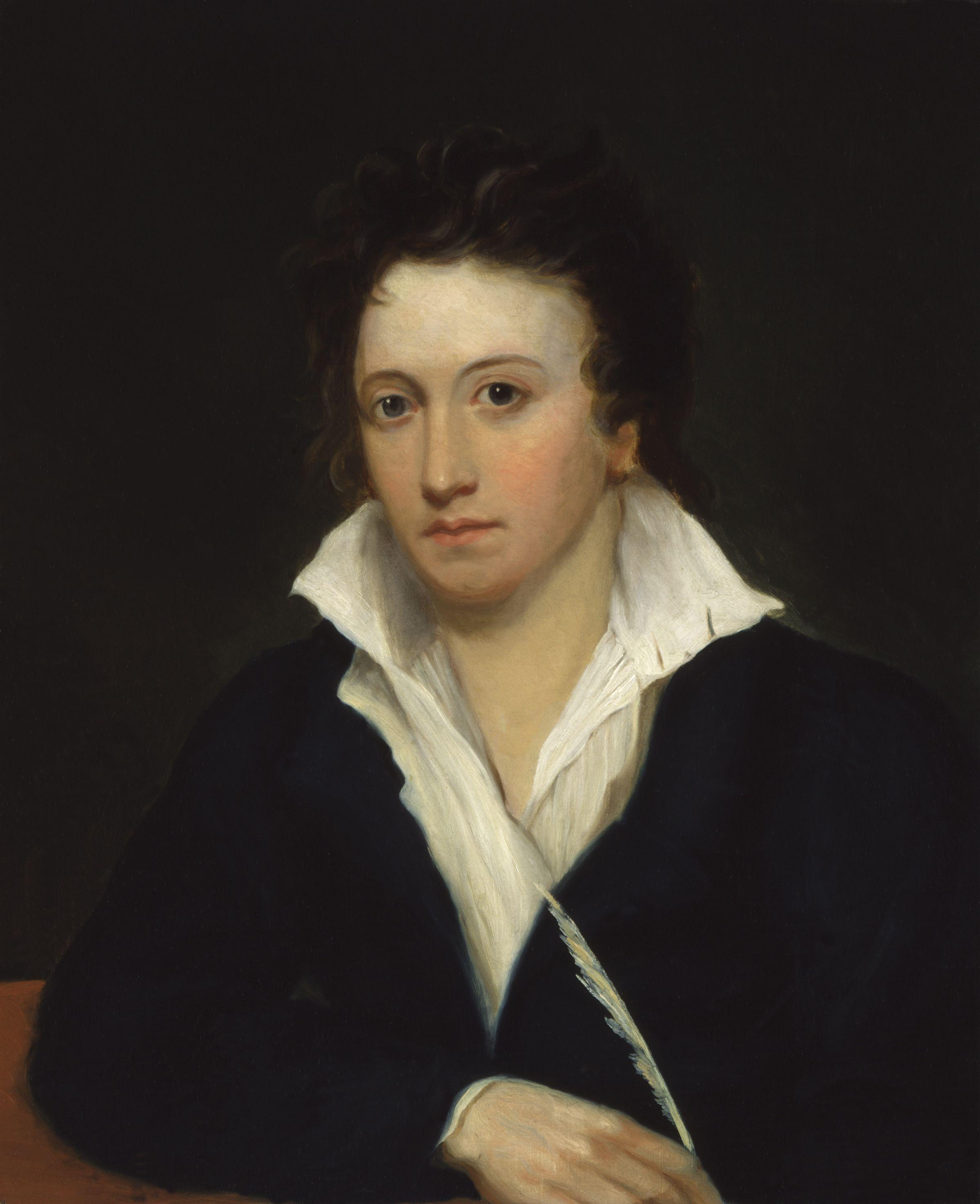
Percy Bysshe Shelley nejznámější citáty

„Čím víc se učíme, tím víc odhalujeme svoji nevědomost.“
[(en) The more we study, the more we discover our ignorance.]
Percy Bysshe Shelley: Citáty o lidech
Percy Bysshe Shelley citáty a výroky
Percy Bysshe Shelley: Citáty anglicky
On a Future State (1815; publ. 1840)
“Poetry is the record of the best and happiest moments of the happiest and best minds.”
A Defence of Poetry http://www.bartleby.com/27/23.html (1821)
Not Shelley but the I Ching
Misattributed
To Jane. The keen Stars were twinkling; reported in Bartlett's Familiar Quotations, 10th ed. (1919)
Mont Blanc http://www.readprint.com/work-1366/Percy-Bysshe-Shelley (1816), st. 3
“On a poet's lips I slept
Dreaming like a love-adept
In the sound his breathing kept.”
Percy Bysshe Shelley Prometheus Unbound
Fourth Spirit, Act I, l. 737
Prometheus Unbound (1818–1819; publ. 1820)
Percy Bysshe Shelley Prometheus Unbound
Demogorgon, Act IV, closing lines
Prometheus Unbound (1818–1819; publ. 1820)
“Best and brightest, come away!”
Zdroj: To Jane: The Invitation (1822), l. 1
Percy Bysshe Shelley kniha The Necessity of Atheism
The Necessity of Atheism (1811)
The Devil's Walk http://www.rc.umd.edu/editions/shelley/devil/br-text.html (1812), st. 1
Percy Bysshe Shelley kniha The Necessity of Atheism
The Necessity of Atheism (1811)
Percy Bysshe Shelley The Masque of Anarchy
St. 9
The Masque of Anarchy (1819)
Percy Bysshe Shelley The Revolt of Islam
Dedication, st. 6
The Revolt of Islam (1817)
“There is no sport in hate where all the rage
Is on one side.”
Lines to a Reviewer http://etext.library.adelaide.edu.au/s/shelley/percy_bysshe/s54cp/section229.html (1821), l. 3
“He gave man speech, and speech created thought,
Which is the measure of the universe.”
Percy Bysshe Shelley Prometheus Unbound
Asia, Act II, sc. iv, l. 72
Prometheus Unbound (1818–1819; publ. 1820)
St. 1 <br class="br"> Song: Rarely, Rarely, Comest Thou http://www.poetryconnection.net/poets/Percy_Bysshe_Shelley/17889 (1821)
Percy Bysshe Shelley kniha A Vindication of Natural Diet
Zdroj: A Vindication of Natural Diet (1813)
On a Future State (1815; publ. 1840)
“What! alive, and so bold, O earth?”
Written on hearing the News of the Death of Napoleon; reported in Bartlett's Familiar Quotations, 10th ed. (1919)
"Verses On A Cat" (1800), St. 2, as published in Life of Shelley (1858) by Thomas Jefferson Hogg, p. 21


