Ted Nelson citáty

Theodor Holm Nelson je americký sociolog, filozof a průkopník informačních technologií. V roce 1963 poprvé použil termín "hypertext" a uveřejnil ho v roce 1965. Je mu také přičítáno první užití slov hypermedia, virtualita[zdroj?], intervingularita a teledildonika. Hlavním bodem jeho díla bylo vyrobit počítače snadno dostupné běžným lidem. Jeho heslo je:

Uživatelské prostředí by mělo být tak jednoduché, že začátečník v nouzi mu porozumí během deseti sekund.

Ted Nelson prosazuje čtyři zásady: „Většina lidí je líných, většina autorit je škodlivých, Bůh neexistuje a všechno je špatně.“ Wikipedia  
✵ 17. červen 1937
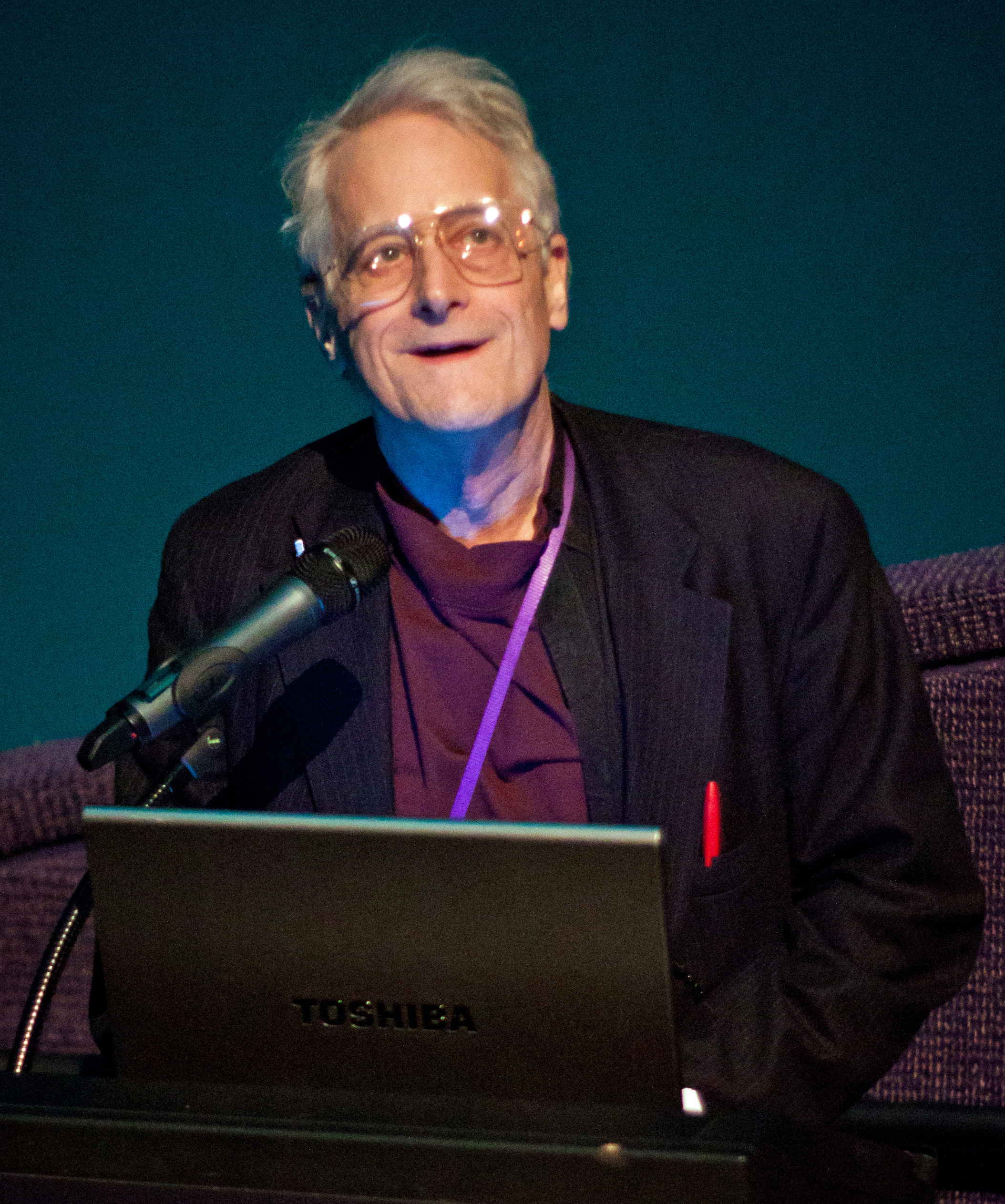
Ted Nelson foto
Ted Nelson: 17 citátů0 lajků

Ted Nelson: Citáty anglicky

“Most people are fools, most authority is malignant, God does not exist, and everything is wrong.”

Ted Nelson

quoted by Gary Wolf in "The Curse of Xanadu" http://www.wired.com/wired/archive/3.06/xanadu_pr.html in Wired (6/1995)

“After all, dumbing down Xanadu sure worked well for Tim Berners-Lee!”

Ted Nelson

Article on Nelson's website, "Indirect Documents at Last!" http://www.hyperland.com/trollout.txt (2005)

“If computers are the wave of the future, displays are the surfboards.”

Ted Nelson

Dream Machines, p 22.
Computer Lib/Dream Machines (1974, rev. 1987)

“Everything is deeply intertwingled.”

Ted Nelson

Computer Lib p. 42 / Dream Machines p.45
Computer Lib/Dream Machines (1974, rev. 1987)

“A user interface should be so simple that a beginner in an emergency can understand it within 10 seconds.”

Ted Nelson

Ted Nelson motto http://sydney.edu.au/news/84.html?newsstoryid=6681

“[Of the web] It's massively successful. It is trivially simple. Massively successful like karaoke - anybody can do it.”

Ted Nelson

BBC News Interview, "Visionary lays into the web" http://news.bbc.co.uk/1/hi/sci/tech/1581891.stm (2001)

“HOW TO LEARN ANYTHINGAs far as I can tell these are the techniques used by bright people who want to learn something other than by taking courses in it. […]1. DECIDE WHAT YOU WANT TO LEARN. But you can't know this exactly, because you don't know exactly how any field is structured until you know all about it.2. READ EVERYTHING YOU CAN ON IT, especially what you enjoy, since that way you can read more of it and faster.3. GRAB FOR INSIGHTS. Regardless of points others are trying to make, when you recognize an insight that has meaning for you, make it your own […] Its importance is not how central it is, but how clear and interesting and memorable to you. REMEMBER IT. Then go for another.4. TIE INSIGHTS TOGETHER. Soon you will have your own string of insights in a field. […]5. CONCENTRATE ON MAGAZINES, NOT BOOKS. Magazines have far more insights per inch of text, and can be read much faster. But when a book really speaks to you, lavish attention on it.6. FIND YOUR OWN SPECIAL TOPICS, AND PURSUE THEM.7. GO TO CONVENTIONS. For some reason, conventions are a splendid concentrated way to learn things; talking to people helps. […]8. "FIND YOUR MAN." Somewhere in the world is someone who will answer your questions extraordinarily well. If you find him, dog him. […]9. KEEP IMPROVING YOUR QUESTIONS. Probably in your head there are questions that don't seem to line up with what your hearing. Don't assume that you don't understand; keep adjusting the questions till you get an answer that relates to what you wanted.10. YOUR FIELD IS BOUNDED WHERE YOU WANT IT TO BE. Just because others group and stereotype things in conventional ways does not mean they are necessarily right. Intellectual subjects are connected every which way; your field is what you think it is. […]”

Ted Nelson

Dream Machines
Computer Lib/Dream Machines (1974, rev. 1987)

“You can and must understand computers now!”

Ted Nelson

Slogan. (The insistence that ordinary people need to understand computers is remarkable for its era: the first personal computers were not available until 1975.)
Computer Lib/Dream Machines (1974, rev. 1987)

“I have long been alarmed by people’s sheeplike acceptance of the term ‘computer technology’ — it sounds so objective and inexorable — when most computer technology is really a bunch of ideas turned into conventions and packages.”

Ted Nelson

Quoted in In Venting, a Computer Visionary Educates http://www.nytimes.com/2009/01/11/business/11stream.html?_r=1 by John Markoff, published January 10, 2009 in the New York Times, page BU4 of the New York edition.

“We should not impose regularity where it does not exist.”

Ted Nelson

Ted Nelson on Zigzag data structures http://www.youtube.com/watch?feature=player_detailpage&v=WEj9vqVvHPc#t=188s (6 September, 2008

Podobní autoři

José Ortega Y Gasset foto
José Ortega Y Gasset24
španělský liberální filozof a esejista None
Zygmunt Bauman foto
Zygmunt Bauman8
polský filozof a sociolog None
Max Weber foto
Max Weber6
německý sociolog, filozof a politický ekonom None
Antonio Gramsci foto
Antonio Gramsci4
italský politik, publicista a marxistický filosof None
George Santayana foto
George Santayana29
20. století španělsko-americký filozof zabývající se pragma… None
Theodor W. Adorno foto
Theodor W. Adorno11
německý sociolog, filozof a muzikolog známý pro jeho kritic… None
Tomáš Halík foto
Tomáš Halík36
český filozof, psycholog, religionista, sociolog, teolog a … None
Jacques Fresco foto
Jacques Fresco1
americký vědec, filozof, sociolog, architekt, designér, soc… None
Robert Fulghum foto
Robert Fulghum113
americký spisovatel, pastor a učitel None
Peter Drucker foto
Peter Drucker28
rakouský ekonom a spisovatel None