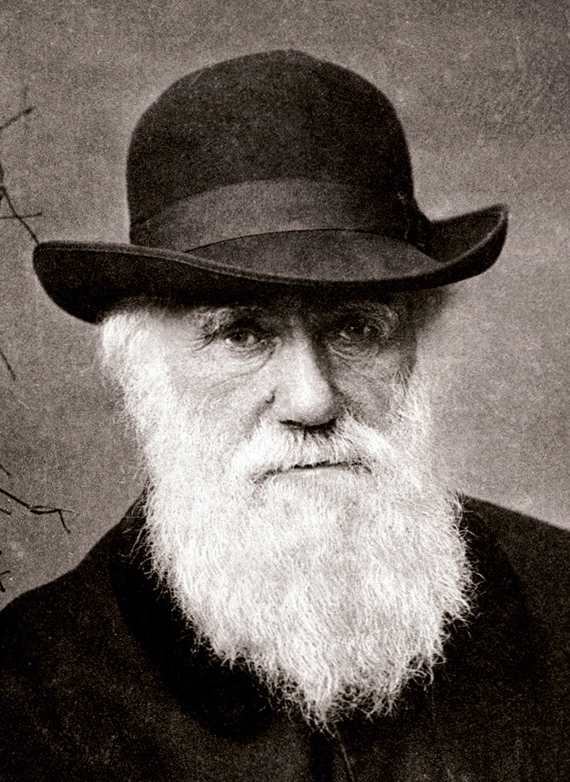
Charles Darwin nejznámější citáty
Charles Darwin citáty a výroky
Charles Darwin kniha The Descent of Man, and Selection in Relation to Sex
Zdroj: Charles Darwin, The Descent of Man, část II, kapitola XXI, str. 405
Charles Darwin kniha The Descent of Man, and Selection in Relation to Sex
Zdroj: Charles Darwin, The Descent of Man, část I, kapitola VI, str. 201
Charles Darwin: Citáty anglicky
Charles Darwin kniha The Descent of Man, and Selection in Relation to Sex
volume I, chapter II: "Comparison of the Mental Powers of Man and the Lower Animals", pages 41-42 http://darwin-online.org.uk/content/frameset?pageseq=54&itemID=F937.1&viewtype=image <br class="br">The Descent of Man (1871)
Charles Darwin kniha The Descent of Man, and Selection in Relation to Sex
volume I, chapter V: "On the Development of the Intellectual and Moral Faculties during Primeval and Civilised Times" (second edition, 1874) page 143 http://darwin-online.org.uk/content/frameset?pageseq=166&itemID=F944&viewtype=image <br class="br">The Descent of Man (1871)
Charles Darwin kniha The Expression of the Emotions in Man and Animals
Zdroj: The Expression of the Emotions in Man and Animals (1872), chapter XIII: "Self-attention — Shame — Shyness — Modesty: Blushing", page 347 http://darwin-online.org.uk/content/frameset?pageseq=375&itemID=F1142&viewtype=image
Charles Darwin kniha The Descent of Man, and Selection in Relation to Sex
volume I, chapter I: "The Evidence of the Descent of Man from some Lower Form", pages 13-14 http://darwin-online.org.uk/content/frameset?pageseq=26&itemID=F937.1&viewtype=image <br class="br">The Descent of Man (1871)
Charles Darwin kniha The Descent of Man, and Selection in Relation to Sex
volume II, chapter XXI: "General Summary and Conclusion", page 393 http://darwin-online.org.uk/content/frameset?pageseq=410&itemID=F937.2&viewtype=image <br class="br">The Descent of Man (1871)
page 48 http://darwin-online.org.uk/content/frameset?pageseq=88&itemID=F1497&viewtype=image <br class="br">Autobiography (1958)
“It is a curious little world within itself”
Charles Darwin kniha The Voyage of the Beagle
About the island of Saint Helena
The Voyage of the Beagle (1839)
Zdroj: http://www.darwinproject.ac.uk/letter/entry-305
Charles Darwin kniha The Expression of the Emotions in Man and Animals
Zdroj: The Expression of the Emotions in Man and Animals (1872), chapter XIV: "Concluding Remarks and Summary", page 352 http://darwin-online.org.uk/content/frameset?pageseq=380&itemID=F1142&viewtype=image
volume I, chapter VIII: "Religion", pages 306-307 http://darwin-online.org.uk/content/frameset?pageseq=324&itemID=F1452.1&viewtype=image; letter http://www.darwinproject.ac.uk/entry-8837 to Dutch student N.D. Doedes (2 April 1873) <br class="br">The Life and Letters of Charles Darwin (1887)
Charles Darwin kniha More Letters of Charles Darwin
Letter to John Scott, quoted in More Letters of Charles Darwin: A Record of His Work in a Series of Hitherto Unpublished Letters http://books.google.com/books?id=8FXwAAAAMAAJ&, volume 2, page 323 (1903) <br class="br">Other letters, notebooks, journal articles, recollected statements
volume I, chapter VI: "The Voyage", page 246 http://darwin-online.org.uk/content/frameset?pageseq=264&itemID=F1452.1&viewtype=image; letter to sister Caroline Sarah Darwin (22 May 1833) <br class="br">The Life and Letters of Charles Darwin (1887)
volume III, chapter IV: "The Publication of the 'Descent of Man', page 176 http://darwin-online.org.uk/content/frameset?pageseq=188&itemID=F1452.3&viewtype=image; letter to Thomas Higginson (27 February 1873) <br class="br">The Life and Letters of Charles Darwin (1887)
Letter http://www.darwinproject.ac.uk/letter/entry-12041 to John Fordyce, 7 May 1879 <br class="br">Other letters, notebooks, journal articles, recollected statements
Charles Darwin kniha The Descent of Man, and Selection in Relation to Sex
second edition (1874), chapter XIX: "Secondary Sexual Characters of Man", page 563 http://darwin-online.org.uk/content/frameset?pageseq=586&itemID=F944&viewtype=image <br class="br">The Descent of Man (1871)
The first sentence is often quoted in isolation http://www.conservapedia.com/Charles_Darwin, with the suggestion that Darwin is saying that his speculations concerning evolution "run quite beyond the bounds of true science." In fact, as the context makes clear, Darwin is referring to his speculations concerning the geographical ranges of genera with few species. <br class="br">Other letters, notebooks, journal articles, recollected statements <br class="br">Zdroj: Letter http://www.darwinproject.ac.uk/letter/entry-2109 to Asa Gray, 18 June 1857
volume II, chapter II: "The Growth of the 'Origin of Species' — 1843-1856", page 23 http://darwin-online.org.uk/content/frameset?pageseq=39&itemID=F1452.2&viewtype=image; letter http://www.darwinproject.ac.uk/letter/entry-729 to J.D. Hooker (11 January 1844) <br class="br">The Life and Letters of Charles Darwin (1887)
Charles Darwin kniha The Formation of Vegetable Mould through the Action of Worms
Zdroj: The Formation of Vegetable Mould through the Action of Worms (1881), Chapter 2: Habits of Worms, p. 70. http://darwin-online.org.uk/content/frameset?pageseq=85&itemID=F1357&viewtype=image
Charles Darwin kniha On the Origin of Species (1859)
This passage has been cited as an anticipation of the idea of punctuated equilibrium. <br class="br">Zdroj: On the Origin of Species (1859), chapter IV: "Natural Selection", page 105 http://darwin-online.org.uk/content/frameset?pageseq=120&itemID=F373&viewtype=image
“Even insects express anger, terror, jealousy, and love by their stridulation.”
Charles Darwin kniha The Expression of the Emotions in Man and Animals
Zdroj: The Expression of the Emotions in Man and Animals (1872), chapter XIV: "Concluding Remarks and Summary", page 350
Charles Darwin kniha The Formation of Vegetable Mould through the Action of Worms
Introduction, p. 6. http://darwin-online.org.uk/content/frameset?pageseq=21&itemID=F1357&viewtype=image <br class="br">The Formation of Vegetable Mould through the Action of Worms (1881)
Charles Darwin kniha The Descent of Man, and Selection in Relation to Sex
volume I, chapter VII: "On the Races of Man", page 233 http://darwin-online.org.uk/content/frameset?pageseq=246&itemID=F937.1&viewtype=image <br class="br">The Descent of Man (1871)
Charles Darwin kniha The Descent of Man, and Selection in Relation to Sex
volume I, chapter II: "Comparison of the Mental Powers of Man and the Lower Animals", page 46 http://darwin-online.org.uk/content/frameset?pageseq=59&itemID=F937.1&viewtype=image <br class="br">The Descent of Man (1871)
Charles Darwin kniha The Descent of Man, and Selection in Relation to Sex
second edition (1874), chapter XIX: "Secondary Sexual Characters of Man", page 564 http://darwin-online.org.uk/content/frameset?pageseq=587&itemID=F944&viewtype=image <br class="br">The Descent of Man (1871)
Charles Darwin kniha On the Origin of Species (1859)
Compare: "This survival of the fittest, which I have here sought to express in mechanical terms, is that which Mr Darwin has called 'natural selection, or the preservation of favoured races in the struggle for life.' ", Herbert Spencer, The Principles of Biology (1864) volume 1, part III: "The Evolution of Life", chapter XII, "Indirect Equilibration", pages 444-445. <br class="br">Zdroj: On the Origin of Species (1859), chapter III: "Struggle For Existence", page 72 http://darwin-online.org.uk/content/frameset?pageseq=101&itemID=F387&viewtype=image, in the fifth (1869) and sixth (1872) editions
Charles Darwin kniha On the Origin of Species (1859)
Zdroj: On the Origin of Species (1859), chapter IX: "On the Imperfection of the Geological Record", page 280 http://darwin-online.org.uk/content/frameset?pageseq=298&itemID=F373&viewtype=image
Charles Darwin kniha The Descent of Man, and Selection in Relation to Sex
volume II, chapter XIX: "Secondary Sexual Characters of Man", pages 316-317 http://darwin-online.org.uk/content/frameset?pageseq=333&itemID=F937.2&viewtype=image <br class="br">The Descent of Man (1871)
This related misquote http://www.darwinproject.ac.uk/six-things-darwin-never-said appeared in The Living Clocks (1971) by Ritchie R. Ward. <br class="br">Misattributed
Charles Darwin kniha The Voyage of the Beagle
Zdroj: The Voyage of the Beagle (1839), chapter II, "Rio de Janeiro", 18 April 1832, page 29 http://darwin-online.org.uk/content/frameset?viewtype=image&itemID=F11&pageseq=48
Charles Darwin kniha The Descent of Man, and Selection in Relation to Sex
volume I, chapter II: "Comparison of the Mental Powers of Man and the Lower Animals", page 34 http://darwin-online.org.uk/content/frameset?pageseq=47&itemID=F937.1&viewtype=image <br class="br">The Descent of Man (1871)
Charles Darwin kniha The Formation of Vegetable Mould through the Action of Worms
Zdroj: The Formation of Vegetable Mould through the Action of Worms (1881), Chapter 2: Habits of Worms, p. 58. http://darwin-online.org.uk/content/frameset?pageseq=73&itemID=F1357&viewtype=image


