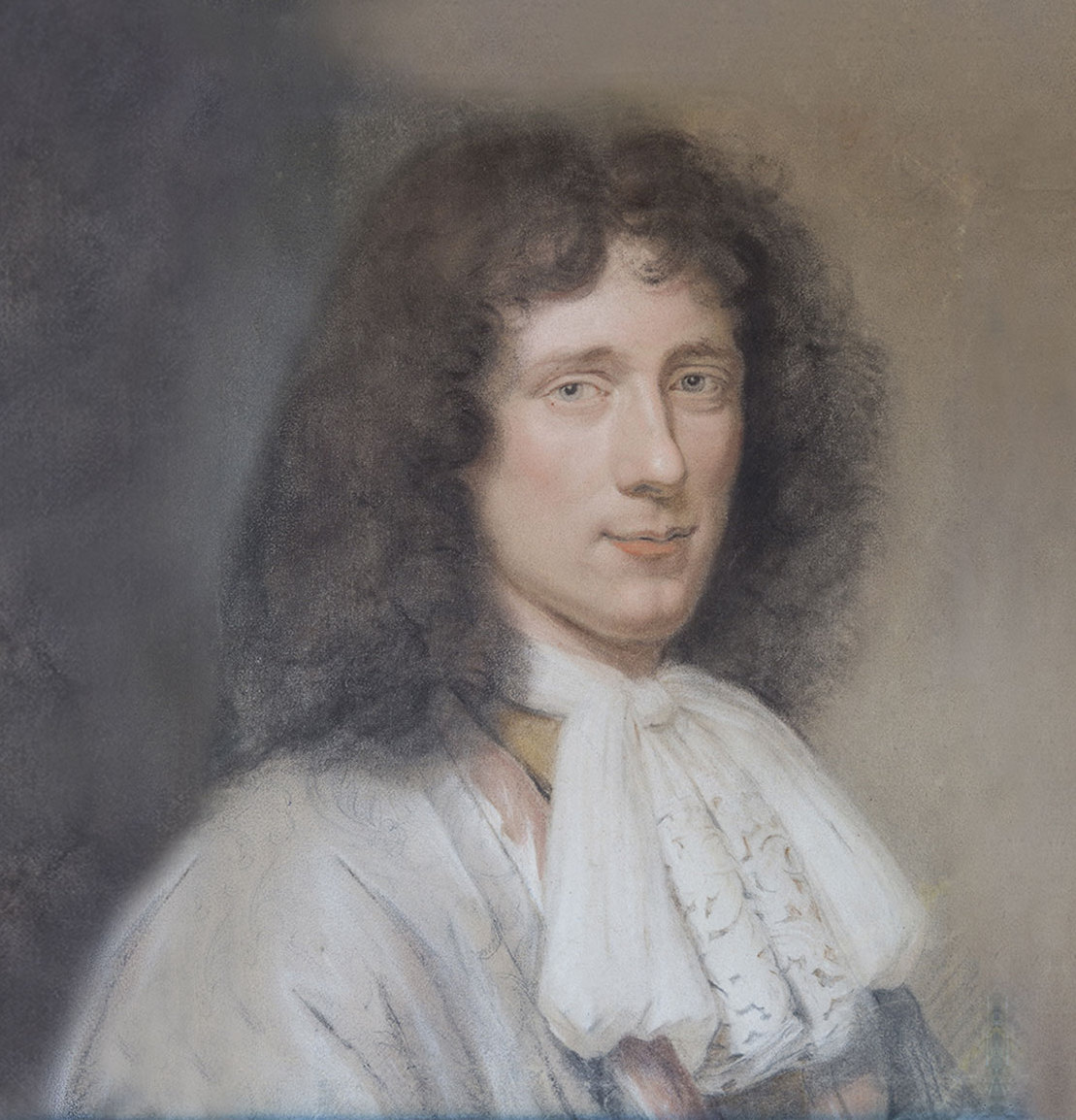
Christiaan Huygens: Citáty anglicky
Book 1, p. 8
Cosmotheoros (1695; publ. 1698)
“…the power of this line [the cycloid] to measure time.”
Christiaan Huygens kniha Horologium Oscillatorium
Horologium Oscillatorium (1673) as quoted by Joella G. Yoder, "Christiaan Huygens, Book on the Pendulum Clock" in Landmark Writings in Western Mathematics 1640-1940 ed., Ivor Grattan-Guinness (2005)
Letter to Fatio de Duillier (11 July 1687), quoted in René Dugas, Mechanics in the seventeenth century (1958), p. 440
(1692) writing five years after the appearance of Newton's Principia, as quoted in A. R. Manwell, Mathematics Before Newton (Oxford University Press, 1959), p. 56 – «He [Huygens] said, indeed, that the idea of universal attraction [gravitation] 'appears to me absurd'.»
Christiaan Huygens kniha Treatise on Light
Treatise on Light (1690) - preface, Translated by Michael R. Matthews, Scientific Background to Modern Philosophy. 1989. p. 126
Book I http://www.staff.science.uu.nl/~gent0113/huygens/huygens_ct_en.htm, p. 27 <br class="br">Cosmotheoros (1695; publ. 1698)
“I believe that we do not know anything for certain, but everything probably.”
Letter to Pierre Perrault, 'Sur la préface de M. Perrault de son traité de l'Origine des fontaines' (1673), Oeuvres Complètes de Christiaan Huygens http://books.google.com/books?id=9IVA7sK_Bh8C (1897), Vol. 7, 298. Quoted in Jacques Roger, The Life Sciences in Eighteenth-Century French Thought, ed. Keith R. Benson and trans. Robert Ellrich (1997), 163
Book 1, p. 18
Cosmotheoros (1695; publ. 1698)
(1691) quoted in Popular Astronomy, Vol. 56 (1948), pp. 189–190.
Book 1, p. 11
Cosmotheoros (1695; publ. 1698)
Book 1, p. 7
Cosmotheoros (1695; publ. 1698)
Book 1, p. 1
Cosmotheoros (1695; publ. 1698)
Book 1, p. 10
Cosmotheoros (1695; publ. 1698)
Quam mirabilis igitur, quamque stupenda mundi amplitudo, & magnificentia jam mente concipienda est. Tot Soles, tot Terrae atque harum unaquaeque tot herbis, arboribus, animalibus, tot maribus, montibusque exornata. Et erit etiam unde augeatur admiratio, si quis ea quae de fixarum Stellarum distantia, & multitudine hisce addimus, pependerit. <br class="br"> Book 2 http://www.staff.science.uu.nl/~gent0113/huygens/huygens_ct_en.htm, pp. 150-151 <br class="br">Cosmotheoros (1695; publ. 1698)
“The world is my country, to promote science is my religion.”
The earliest found citation is in K.O. Meinsma, Spinoza en zijn kring. Historisch-kritische studiën over Hollandsche vrijgeesten (Martinus Nijhoff, 's-Gravenhage, 1896). This influential study was translated in French and German, but not in English. In the original Dutch context it seems as though this is not a quote from Huygens, but a characterisation by the author (Meinsma) of what 'could haven been' Huygens' devise.
In Cosmos: A Personal Voyage (Episode 6) from 1980 it is phrased The world is my country, science my religion.
Also in The Making of Modern Europe, 1648-1780 (1985) by Geoffrey Treasure, p. 474, it is declared that this was Huygens' "motto" — but this seems very similar to the much more famous and long attested declaration of Thomas Paine in Rights of Man (1791): "My country is the world, and my religion is to do good" which has long been paraphrased "The world is my country, and to do good is my religion."
Disputed


