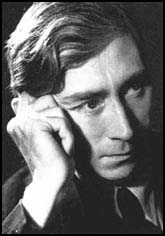
Herbert Edward Read nejznámější citáty
Zdroj: [Read, Herbert, 1964, Osudy moderního umění, Státní nakladatelství krásné literatury a umění, Praha, 171]
Herbert Edward Read: Citáty o umění
Herbert Edward Read citáty a výroky
Originál: (en) Mr. Joyce is the high priest of modern literature precisely because literature is a priesthood and has a sanctuary more inaccessible than the monasteries of Thibet.
Zdroj: [1984, Light Rays: James Joyce and Modernism, New Horizon Press, 97, en]
Herbert Edward Read: Citáty anglicky
Foreword (1956), to The Rebel (1951) by Albert Camus
Other Quotes
Kontext: All revolutions in modern times, Camus points out, have led to a reinforcement of the power of the State.
"The strange and terrifying growth of the modern State can be considered as the logical conclusion of inordinate technical and philosophical ambitions, foreign to the true spirit of rebellion, but which nevertheless gave birth to the revolutionary spirit of our time. The prophetic dream of Marx and the over-inspired predictions of Hegel or of Nietzsche ended by conjuring up, after the city of God had been razed to the ground, a rational or irrational State, which in both cases, however, was founded on terror." The counterrevolutions of fascism only serve to reinforce the general argument.
Camus shows the real quality of his thought in his final pages. It would have been easy, on the facts marshaled in this book, to have retreated into despair or inaction. Camus substitutes the idea of "limits." "We now know, at the end of this long inquiry into rebellion and nihilism, that rebellion with no other limits but historical expediency signifies unlimited slavery. To escape this fate, the revolutionary mind, if it wants to remain alive, must therefore, return again to the sources of rebellion and draw its inspiration from the only system of thought which is faithful to its origins: thought that recognizes limits." To illustrate his meaning Camus refers to syndicalism, that movement in politics which is based on the organic unity of the cell, and which is the negation of abstract and bureaucratic centralism. He quotes Tolain: "Les etres humains ne s'emancipent qu'au sein des groupes naturels" — human beings emancipate themselves only on the basis of natural groups. "The commune against the State... deliberate freedom against rational tyranny, finally altruistic individualism against the colonization of the masses, are, then, the contradictions that express once again the endless opposition of moderation to excess which has animated the history of the Occident since the time of the ancient world." This tradition of "mesure" belongs to the Mediterranean world, and has been destroyed by the excesses of German ideology and of Christian otherworldliness — by the denial of nature.
Restraint is not the contrary of revolt. Revolt carries with it the very idea of restraint, and "moderation, born of rebellion, can only live by rebellion. It is a perpetual conflict, continually created and mastered by the intelligence.... Whatever we may do, excess will always keep its place in the heart of man, in the place where solitude is found. We all carry within us our places of exile, our crimes and our ravages. But our task is not to unleash them on the world; it is to fight them in ourselves and in others.
The Origins of Art (1966)
Other Quotes
Kontext: What I am searching for... is some formula that would combine individual initiative with universal values, and that combination would give us a truly organic form. Form, which we discover in nature by analysis, is obstinately mathematical in its manifestations—which is to say that creation in art requires thought and deliberation. But this is not to say that form can be reduced to a formula. In every work of art it must be re-created, but that too is true of every work of nature. Art differs from nature not in its organic form, but in its human origins: in the fact that it is not God or a machine that makes a work of art, but an individual with his instincts and intuitions, with his sensibility and his mind, searching relentlessly for the perfection that is neither in mind nor in nature, but in the unknown. I do not mean this in an other-worldly sense, only that the form of the flower is unknown to the seed.
“Restraint is not the contrary of revolt.”
Foreword (1956), to The Rebel (1951) by Albert Camus
Other Quotes
Kontext: All revolutions in modern times, Camus points out, have led to a reinforcement of the power of the State.
"The strange and terrifying growth of the modern State can be considered as the logical conclusion of inordinate technical and philosophical ambitions, foreign to the true spirit of rebellion, but which nevertheless gave birth to the revolutionary spirit of our time. The prophetic dream of Marx and the over-inspired predictions of Hegel or of Nietzsche ended by conjuring up, after the city of God had been razed to the ground, a rational or irrational State, which in both cases, however, was founded on terror." The counterrevolutions of fascism only serve to reinforce the general argument.
Camus shows the real quality of his thought in his final pages. It would have been easy, on the facts marshaled in this book, to have retreated into despair or inaction. Camus substitutes the idea of "limits." "We now know, at the end of this long inquiry into rebellion and nihilism, that rebellion with no other limits but historical expediency signifies unlimited slavery. To escape this fate, the revolutionary mind, if it wants to remain alive, must therefore, return again to the sources of rebellion and draw its inspiration from the only system of thought which is faithful to its origins: thought that recognizes limits." To illustrate his meaning Camus refers to syndicalism, that movement in politics which is based on the organic unity of the cell, and which is the negation of abstract and bureaucratic centralism. He quotes Tolain: "Les etres humains ne s'emancipent qu'au sein des groupes naturels" — human beings emancipate themselves only on the basis of natural groups. "The commune against the State... deliberate freedom against rational tyranny, finally altruistic individualism against the colonization of the masses, are, then, the contradictions that express once again the endless opposition of moderation to excess which has animated the history of the Occident since the time of the ancient world." This tradition of "mesure" belongs to the Mediterranean world, and has been destroyed by the excesses of German ideology and of Christian otherworldliness — by the denial of nature.
Restraint is not the contrary of revolt. Revolt carries with it the very idea of restraint, and "moderation, born of rebellion, can only live by rebellion. It is a perpetual conflict, continually created and mastered by the intelligence.... Whatever we may do, excess will always keep its place in the heart of man, in the place where solitude is found. We all carry within us our places of exile, our crimes and our ravages. But our task is not to unleash them on the world; it is to fight them in ourselves and in others.
The Origins of Art (1966)
Other Quotes
Kontext: What I am searching for... is some formula that would combine individual initiative with universal values, and that combination would give us a truly organic form. Form, which we discover in nature by analysis, is obstinately mathematical in its manifestations—which is to say that creation in art requires thought and deliberation. But this is not to say that form can be reduced to a formula. In every work of art it must be re-created, but that too is true of every work of nature. Art differs from nature not in its organic form, but in its human origins: in the fact that it is not God or a machine that makes a work of art, but an individual with his instincts and intuitions, with his sensibility and his mind, searching relentlessly for the perfection that is neither in mind nor in nature, but in the unknown. I do not mean this in an other-worldly sense, only that the form of the flower is unknown to the seed.
Foreword (1956), to The Rebel (1951) by Albert Camus
Other Quotes
Kontext: All revolutions in modern times, Camus points out, have led to a reinforcement of the power of the State.
"The strange and terrifying growth of the modern State can be considered as the logical conclusion of inordinate technical and philosophical ambitions, foreign to the true spirit of rebellion, but which nevertheless gave birth to the revolutionary spirit of our time. The prophetic dream of Marx and the over-inspired predictions of Hegel or of Nietzsche ended by conjuring up, after the city of God had been razed to the ground, a rational or irrational State, which in both cases, however, was founded on terror." The counterrevolutions of fascism only serve to reinforce the general argument.
Camus shows the real quality of his thought in his final pages. It would have been easy, on the facts marshaled in this book, to have retreated into despair or inaction. Camus substitutes the idea of "limits." "We now know, at the end of this long inquiry into rebellion and nihilism, that rebellion with no other limits but historical expediency signifies unlimited slavery. To escape this fate, the revolutionary mind, if it wants to remain alive, must therefore, return again to the sources of rebellion and draw its inspiration from the only system of thought which is faithful to its origins: thought that recognizes limits." To illustrate his meaning Camus refers to syndicalism, that movement in politics which is based on the organic unity of the cell, and which is the negation of abstract and bureaucratic centralism. He quotes Tolain: "Les etres humains ne s'emancipent qu'au sein des groupes naturels" — human beings emancipate themselves only on the basis of natural groups. "The commune against the State... deliberate freedom against rational tyranny, finally altruistic individualism against the colonization of the masses, are, then, the contradictions that express once again the endless opposition of moderation to excess which has animated the history of the Occident since the time of the ancient world." This tradition of "mesure" belongs to the Mediterranean world, and has been destroyed by the excesses of German ideology and of Christian otherworldliness — by the denial of nature.
Restraint is not the contrary of revolt. Revolt carries with it the very idea of restraint, and "moderation, born of rebellion, can only live by rebellion. It is a perpetual conflict, continually created and mastered by the intelligence.... Whatever we may do, excess will always keep its place in the heart of man, in the place where solitude is found. We all carry within us our places of exile, our crimes and our ravages. But our task is not to unleash them on the world; it is to fight them in ourselves and in others.
“All art originates in an act of intuition or vision.”
Form in Modern Poetry(1932)
Referring to the curiosity and sense of wonder of the child, p. 17
Collected Poems (1966)
What is a Poem - Endword - Selected Poems (1926)
Poetry and Anarchism (1938)
Literary Quotes
English Prose Style (1928)
Literary Quotes
“The rhythm of a poem ceases the moment the feeling loses its intensity.”
What is a Poem - Endword - Selected Poems (1926)
On the occasion of the opening of Forty Years of Modern Art (February 1948)
Literary Quotes
Zdroj: The Cult of Sincerity (1969), p. 16
Note appended to his poem The End of War (1933)
Literary Quotes
“True poetry was never speech, but always song.”
What is a Poem - Endword - Selected Poems (1926)
Collected Essays in Literary Criticism (1938)
Literary Quotes
Zdroj: Collected Poems (1966), pp. 16-17
“The Politics of the Unpolitical,” To Hell with Culture (1963), p. 38
Other Quotes
What is a Poem - Endword - Selected Poems (1926)
'Phases of English Poetry' Hogarth Press (1928)
Phases in English Poetry (1928)


