„Umělec není placen za svou práci, ale za svou vizi.“
Originál: (en) An artist is not paid for his labor but for his vision.
Zdroj: [Rogers, Sharon C., 2008, Unpretty: A Novel of Suspense, Simon and Schuster, 24, angličtina]
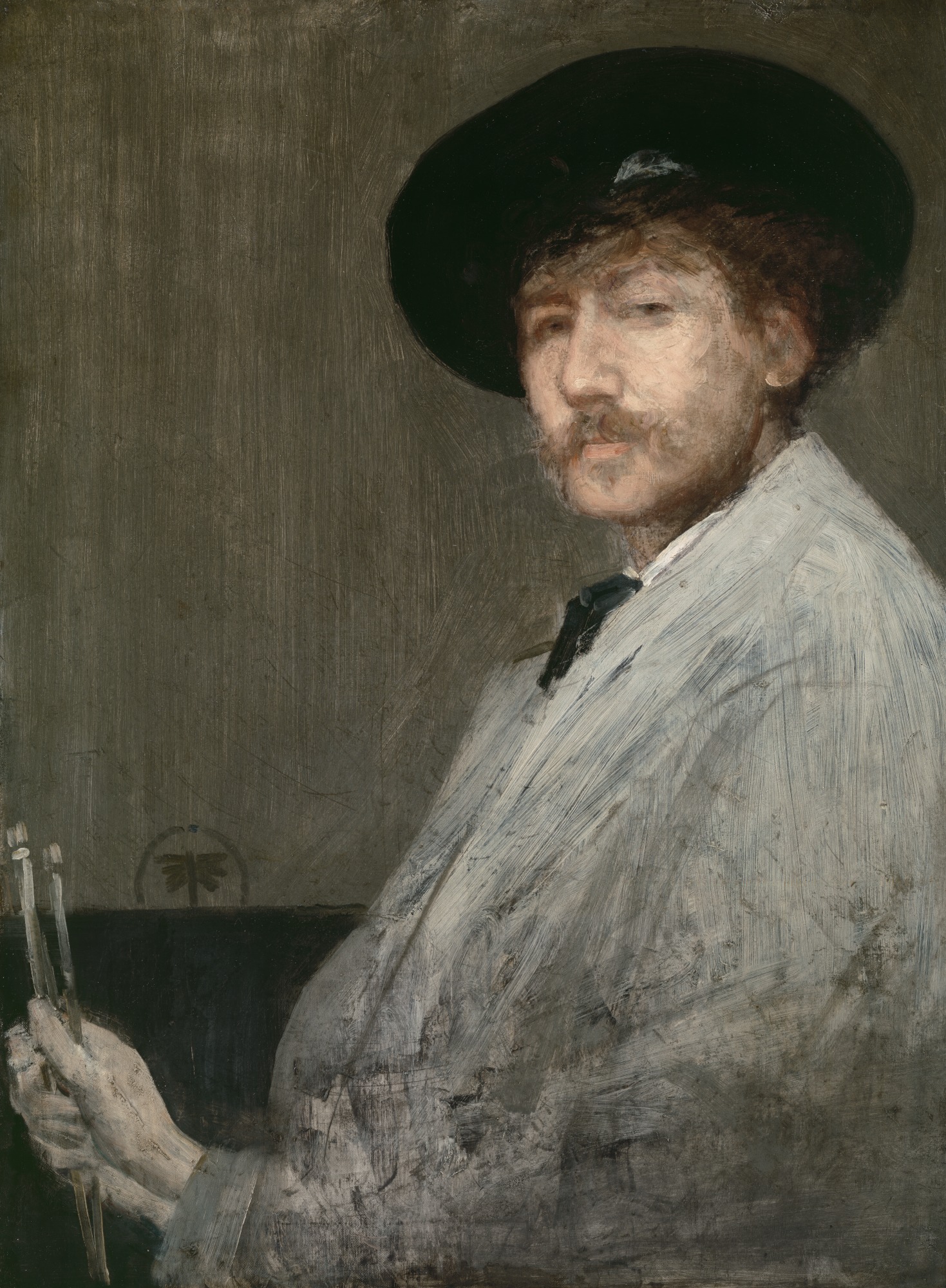
James Abbott McNeill Whistler byl britský malíř a grafik narozený v USA a působící i ve Francii.
Přátelil se se Stéphane Mallarmém, Oscarem Wildem. Byl ovlivněn japonským dřevořezem a impresionisty, prerafaelisty, vytvořil však osobitý styl využívající rafinované barevné harmonie a elegantní kresby, jímž předjímal secesi. Zasloužil se o rozvoj techniky leptu v Anglii. Zastával názory lartpourlartismu, ve svém díle předjímal umění impresionismu, symbolismu a secese. Proslavil se zejména obrazem Aranžmá v šedé a černé: Portrét umělcovy matky, tento obraz je známější pod názvem Whistlerova matka. Wikipedia
„Umělec není placen za svou práci, ale za svou vizi.“
Originál: (en) An artist is not paid for his labor but for his vision.
Zdroj: [Rogers, Sharon C., 2008, Unpretty: A Novel of Suspense, Simon and Schuster, 24, angličtina]
1870 - 1903, his lecture 'Ten O'Clock' (1885)
Zdroj: James McNeill Whistler (1834–1903), Weinberg, H. Barbara, 'Heilbrunn Timeline of Art History'. New York: The Metropolitan Museum of Art, 2000–. http://www.metmuseum.org/toah/hd/whis/hd_whis.htm (April 2010)
Propositions, 2
also in a letter to 'The World', London 22 Mai, 1878; as quoted in Letters of the great artists – from Blake to Pollock, Richard Friedenthal, Thames and Hudson, London, 1963, p. 186
1870 - 1903, The Gentle Art of Making Enemies' (1890)
Propositions, 2
1870 - 1903, The Gentle Art of Making Enemies' (1890)
“I am not arguing with you — I am telling you.”
Propositions, 2
1870 - 1903, The Gentle Art of Making Enemies' (1890)
“Oscar Wilde: 'I wish I had said that'
Whistler: 'You will, Oscar, you will.”
Zdroj: posthumous published, L.C. Ingleby, Oscar Wilde (1907). This is a paraphrased version of the quotation that has come to be accepted. For a chronology of sources see Quote Investigator http://quoteinvestigator.com/2013/09/05/oscar-will/.
1870 - 1903, his lecture 'Ten O'Clock' (1885)
Quoted by Don C. Seitz in Whistler Stories http://www.gutenberg.org/ebooks/13973 (1913) <br class="br">posthumous published
D.C. Seitz, Whistler Stories (1913)
posthumous published
quote of Whistler, (1892) In: Gentle Art of making Enemies, James Abbott McNeill Whistler, G. P. Putnam's Sons, New York, 1922, p. 30
1870 - 1903
D.C. Seitz, Whistler Stories (1913)
posthumous published
In a letter to 'The World', London 22 Mai, 1878; as quoted in Letters of the great artists – from Blake to Pollock, Richard Friedenthal, Thames and Hudson, London, 1963, p. 186
1870 - 1903
Propositions, 2
1870 - 1903, The Gentle Art of Making Enemies' (1890)
Propositions, 2
1870 - 1903, The Gentle Art of Making Enemies' (1890)
“Listen! There was never an artistic period. There was never an art-loving nation.”
1870 - 1903, his lecture 'Ten O'Clock' (1885)
Anderson and Koval, p. 186; as quoted on the English Wikipedia
posthumous published
Quote in a letter to 'The World', London 22 Mai, 1878; as cited in Letters of the great artists – from Blake to Pollock, Richard Friedenthal, Thames and Hudson, London, 1963, p. 186
1870 - 1903
“The rare few, who, early in life, have rid themselves of the friendship of the many.”
Dedication
1870 - 1903, The Gentle Art of Making Enemies' (1890)
After a Dutch newspaper prematurely! reported his death in 1902
1870 - 1903
Tom Prideaux and Time-Life Books, The World of Whistler (1970)
posthumous published
Propositions, 2
1870 - 1903, The Gentle Art of Making Enemies' (1890)
1870 - 1903, his lecture 'Ten O'Clock' (1885)
1870 - 1903, his lecture 'Ten O'Clock' (1885)
“One is always finding out more.”
[A Chat with Mr. Whistler, January 1895, The Studio, 4, 116–121, https://babel.hathitrust.org/cgi/pt?id=umn.319510019270823;view=1up;seq=132] (quote from p. 118)
1870 - 1903, A Chat with Mr. Whistler' (1895)
“One cannot continually disappoint a Continent.”
Propositions, 2
1870 - 1903, The Gentle Art of Making Enemies' (1890)


