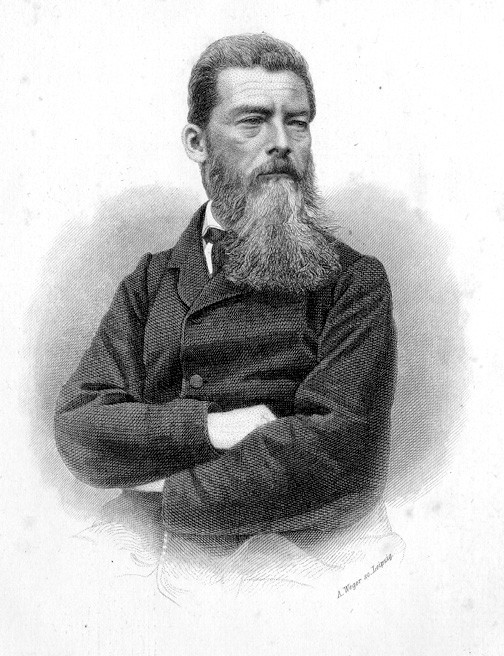
Díla
Das Wesen des Christentums
Ludwig FeuerbachDas Wesen des Christentums
Ludwig FeuerbachLudwig Feuerbach nejznámější citáty
Zdroj: [Kalendárium, ceskatelevize.cz, 2013-05-22, http://www.ceskatelevize.cz/porady/1095927644-kalendrium/209572235300008/]
Ludwig Feuerbach: Citáty o lidech
Ludwig Feuerbach citáty a výroky
Ludwig Feuerbach: Citáty anglicky
Ludwig Feuerbach kniha Das Wesen des Christentums
Introduction, Z. Hanfi, trans., in The Fiery Brook (1972), pp. 101-102
The Essence of Christianity (1841)
“I would rather be a devil in alliance with truth, than an angel in alliance with falsehood.”
Ludwig Feuerbach kniha Das Wesen des Christentums
Zdroj: The Essence of Christianity (1841)
Ludwig Feuerbach kniha Das Wesen des Christentums
Aber freilich für diese Zeit, welche das Bild der Sache, die Kopie dem Original, die Vorstellung der Wirklichkeit, den Schein dem Wesen vorzieht … denn heilig ist ihr nur die Illusion, profan aber die Wahrheit.
Preface to Second Edition (1843)
The Essence of Christianity (1841)
Ludwig Feuerbach kniha Das Wesen des Christentums
Introduction, Z. Hanfi, trans., in The Fiery Brook (1972), p. 99
The Essence of Christianity (1841)
“I distinguish religion from theism,”
Lecture V, R. Manheim, trans. (1967), pp. 34-35 <br class="br"> Lectures on the Essence of Religion http://www.marxists.org/reference/archive/feuerbach/works/lectures/index.htm (1851) <br class="br">Kontext: Religion is indeed essential to or innate in man, but … this is not the religion of theology or theism, not an actual belief in God, but solely the religion that expresses nothing other than man’s feeling of finiteness and dependency on nature. … I distinguish religion from theism, the belief in a being distinct from nature and man. … Today theism, theology, the belief in God have become so identified with religion that to have no God, to theological being, is considered synonymous with having no religion. But here we deal with the original elements of religion. It is theism, theology, that has wrenched man out of his relationship with the world, isolated him, made him into an arrogant self-centered being who exalts himself above nature. And it is only on this level that religion becomes identified with theology, with the belief in a being outside and above nature as the true God. Originally religion expressed nothing other than man’s feeling that he is an inseparable part of nature or the world.
Lecture XXX, Atheism alone a Positive View <br class="br"> Lectures on the Essence of Religion http://www.marxists.org/reference/archive/feuerbach/works/lectures/index.htm (1851)
Ludwig Feuerbach kniha Das Wesen des Christentums
Preface to Second Edition (1843)
The Essence of Christianity (1841)
Z. Hanfi, trans., in The Fiery Brook (1972), p. 68
Towards a Critique of Hegel’s Philosophy (1839)
Ludwig Feuerbach kniha Das Wesen des Christentums
Introduction, Z. Hanfi, trans., in The Fiery Brook (1972), pp. 103-104
The Essence of Christianity (1841)
Ludwig Feuerbach kniha Das Wesen des Christentums
Preface to Second Edition (1843)
The Essence of Christianity (1841)
“The history of philosophical system is the picture gallery of reason.”
Z. Hanfi, trans., in The Fiery Brook (1972), p. 68
Towards a Critique of Hegel’s Philosophy (1839)
Lecture XXX, Atheism alone a Positive View <br class="br"> Lectures on the Essence of Religion http://www.marxists.org/reference/archive/feuerbach/works/lectures/index.htm (1851)
Lecture I, , R. Manheim, trans. (1967), p. 2 <br class="br"> Lectures on the Essence of Religion http://www.marxists.org/reference/archive/feuerbach/works/lectures/index.htm (1851)
Lecture XX, see [Lectures on the Essence of Religion, Harper & Row, New York, 1967, 187, Transl. Ralph Manheim] German: [Vorlesungen über das Wesen der Religion, Wigand, Leipzig, 1851, 241] <br class="br"> Lectures on the Essence of Religion http://www.marxists.org/reference/archive/feuerbach/works/lectures/index.htm (1851)
Z. Hanfi, trans., in The Fiery Brook (1972), p. 75
Towards a Critique of Hegel’s Philosophy (1839)
Lecture V, R. Manheim, trans. (1967), pp. 35-36 <br class="br"> Lectures on the Essence of Religion http://www.marxists.org/reference/archive/feuerbach/works/lectures/index.htm (1851)
Lecture II, R. Manheim, trans. (1967), p. 11 <br class="br"> Lectures on the Essence of Religion http://www.marxists.org/reference/archive/feuerbach/works/lectures/index.htm (1851)
As quoted in "Voices of the New Time" as translated by C. C. Shackford in The Radical Vol. 7 (1870), p. 329
Lecture XXX, Atheism alone a Positive View <br class="br"> Lectures on the Essence of Religion http://www.marxists.org/reference/archive/feuerbach/works/lectures/index.htm (1851)
Lecture XXX, Atheism alone a Positive View <br class="br"> Lectures on the Essence of Religion http://www.marxists.org/reference/archive/feuerbach/works/lectures/index.htm (1851)
Z. Hanfi, trans., in The Fiery Brook (1972), p. 66
Towards a Critique of Hegel’s Philosophy (1839)
Part I, Section 16 <br class="br"> Principles of Philosophy of the Future http://www.marxists.org/reference/archive/feuerbach/works/future/index.htm (1843)
Ludwig Feuerbach kniha Das Wesen des Christentums
Introduction, Z. Hanfi, trans., in The Fiery Brook (1972), p. 102
The Essence of Christianity (1841)
Part II, Section 21 <br class="br"> Principles of Philosophy of the Future http://www.marxists.org/reference/archive/feuerbach/works/future/index.htm (1843)
Z. Hanfi, trans., in The Fiery Brook (1972), p. 67
Towards a Critique of Hegel’s Philosophy (1839)
Z. Hanfi, trans., in The Fiery Brook (1972), p. 67
Towards a Critique of Hegel’s Philosophy (1839)
Part I, Section 14 <br class="br"> Principles of Philosophy of the Future http://www.marxists.org/reference/archive/feuerbach/works/future/index.htm (1843)
Part III, Section 29 <br class="br"> Principles of Philosophy of the Future http://www.marxists.org/reference/archive/feuerbach/works/future/index.htm (1843)
Ludwig Feuerbach kniha Das Wesen des Christentums
Preface
The Essence of Christianity (1841)


