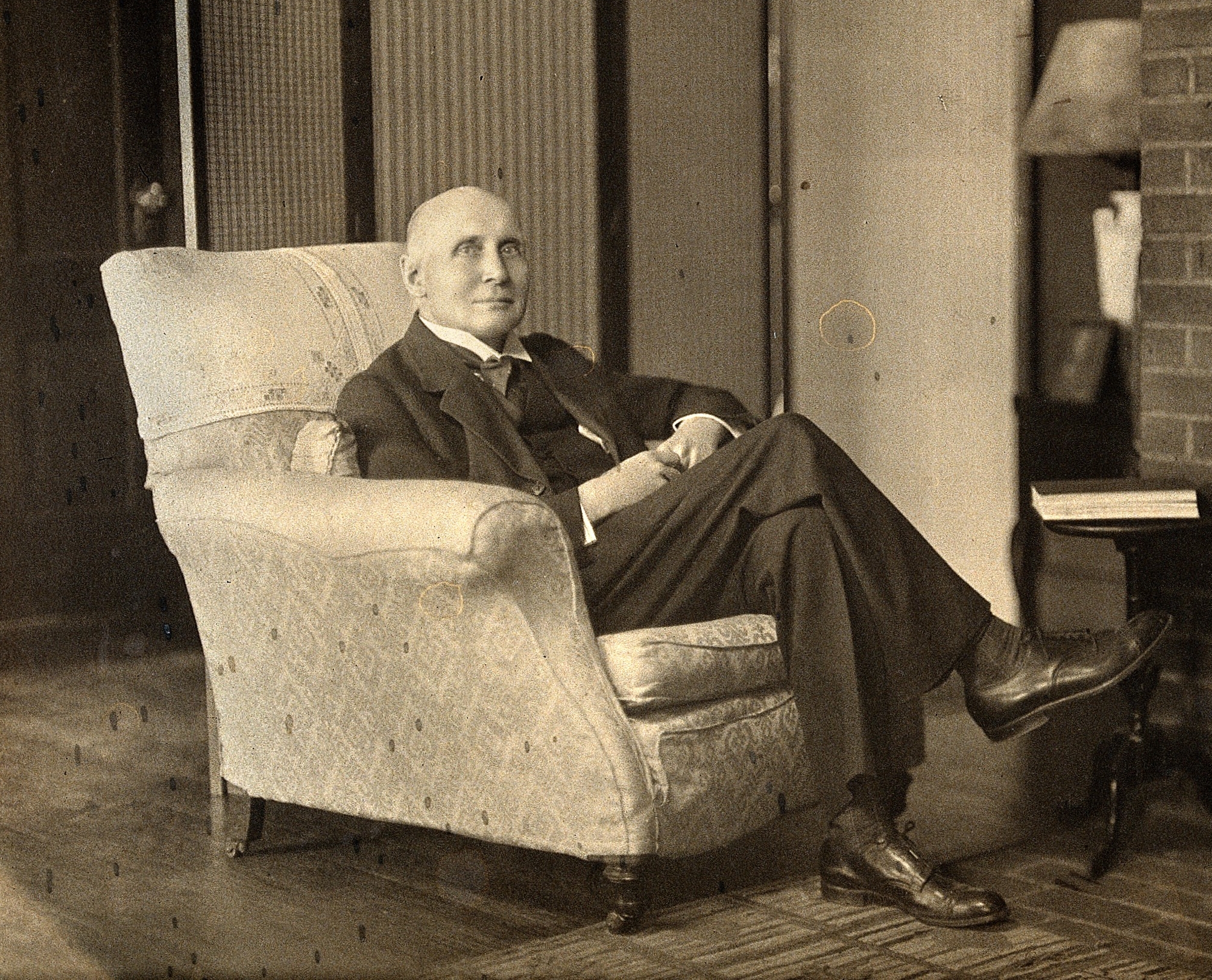
Alfred North Whitehead nejznámější citáty
Zdroj: The Adventures of Ideas, kap. 19.
Alfred North Whitehead citáty a výroky
1926 The Concept of Nature
„Náboženství je loajalita ke světu.“
Alfred North Whitehead kniha Religion in the Making
Religion in the Making, kap. II.
„Hledejte jednoduchost a nedůvěřujte jí.“
Kontext: Cílem vědy je hledat nejjednodušší vysvětlení složitých faktů. Mýlíme se, když si myslíme, že fakta jsou jednoduchá, protože jednoduchost je cílem našeho hledání. Vedoucím heslem v životě každého přírodního filozofa by mělo být: „Hledejte jednoduchost a nedůvěřujte jí.“
Zdroj: [Barrow, John D., Jan Novotný, Teorie všeho, Mladá fronta, Praha, 1999, 214, 82-204-0602-6]
Zdroj: An Introduction to Mathematics, kap. 5.
Zdroj: 1929 The Aims of Education
„Asi nejhlouběji lze definovat mládí jako život ještě nedotčený tragédií.“
Zdroj: Adventures of Ideas, kap. 20.
„Kultura je v nejlepším rozkvětu dokud nezačne analyzovat sebe samu.“
Zdroj: Dialogues, 17.8.1941
Alfred North Whitehead: Citáty anglicky
The Concept of Nature (1919), Chapter VII, p.143 http://www.gutenberg.org/files/18835/18835-h/18835-h.htm#CHAPTER_VII. <br class="br">1910s <br class="br">Kontext: The aim of science is to seek the simplest explanations of complex facts. We are apt to fall into the error of thinking that the facts are simple because simplicity is the goal of our quest. The guiding motto in the life of every natural philosopher should be, "Seek simplicity and distrust it."
Preface
1920s, Science and the Modern World (1925)
Kontext: Philosophy, in one of its functions, is the critic of cosmologies. It is its function to harmonise, refashion, and justify divergent intuitions as to the nature of things. It has to insist on the scrutiny of the ultimate ideas, and on the retention of the whole of the evidence in shaping our cosmological scheme. Its business is to render explicit, and — so far as may be — efficient, a process which otherwise is unconsciously performed without rational tests.
Zdroj: 1920s, Science and the Modern World (1925), Ch. 1: "The Origins of Modern Science"
Kontext: The new tinge to modern minds is a vehement and passionate interest in the relation of general principles to irreducible and stubborn facts. All the world over and at all times there have been practical men, absorbed in 'irreducible and stubborn facts'; all the world over and at all times there have been men of philosophic temperament, who have been absorbed in the weaving of general principles. It is this union of passionate interest in the detailed facts with equal devotion to abstract generalisation which forms the novelty of our present society.
Pt. V, ch. 1, sec. 1.
1920s, Process and Reality: An Essay in Cosmology (1929)
Kontext: There is a greatness in the lives of those who build up religious systems, a greatness in action, in idea and in self-subordination, embodied in instance after instance through centuries of growth. There is a greatness in the rebels who destroy such systems: they are the Titans who storm heaven, armed with passionate sincerity. It may be that the revolt is the mere assertion by youth of its right to its proper brilliance, to that final good of immediate joy. Philosophy may not neglect the multifariousness of the world — the fairies dance, and Christ is nailed to the cross.
“He gave them speech, and they became souls”
Modes of Thought (1938).
1930s
Kontext: The mentality of mankind and the language of mankind created each other. If we like to assume the rise of language as a given fact, then it is not going too far to say that the souls of men are the gift from language to mankind. The account of the sixth day should be written: He gave them speech, and they became souls.
1920s, The Aims of Education (1929)
Kontext: The essence of education is that it be religious. Pray, what is religious education? A religious education is an education which inculcates duty and reverence. Duty arises from our potential control over the course of events. Where attainable knowledge could have changed the issue, ignorance has the guilt of vice. And the foundation of reverence is this perception, that the present holds within itself the complete sum of existence, backwards and forwards, that whole amplitude of time, which is eternity.
Zdroj: 1910s, An Introduction to Mathematics (1911), ch. 5. <!-- pp. 41-42 -->
Kontext: It is a profoundly erroneous truism, repeated by all copy-books and by eminent people when they are making speeches, that we should cultivate the habit of thinking of what we are doing. The precise opposite is the case. Civilization advances by extending the number of important operations which we can perform without thinking about them. Operations of thought are like cavalry charges in a battle — they are strictly limited in number, they require fresh horses, and must only be made at decisive moments.
"The Education of an Englishman" in The Atlantic Monthly, Vol. 138 (1926), p. 192.
1920s
Alfred North Whitehead kniha Process and Reality
Pt. II, ch. 1, sec. 1.
Zdroj: 1920s, Process and Reality: An Essay in Cosmology (1929)
Prologue.
Attributed from posthumous publications, Dialogues of Alfred North Whitehead (1954)
“The human body is an instrument for the production of art in the life of the human soul.”
Zdroj: 1930s, Adventures of Ideas (1933), p. 349.
Pt. V, ch. II, sec. V.
1920s, Process and Reality: An Essay in Cosmology (1929)
as cited in History, Humanity and Evolution (1989), p. 383.
1920s, Science and the Modern World (1925)
1920s, Science and the Modern World (1925)
Zdroj: Attributed from posthumous publications, Dialogues of Alfred North Whitehead (1954), Ch. 29, June 10, 1943.
1920s, The Aims of Education (1929)
1920s, Science and the Modern World (1925)
Zdroj: Attributed from posthumous publications, Dialogues of Alfred North Whitehead (1954), p. 135; Ch. 17, December 15, 1939.
Pt. I, ch. 2, sec. 2.
1920s, Process and Reality: An Essay in Cosmology (1929)
the corruption of the best is the worst
1920s, The Aims of Education (1929)
1920s, The Aims of Education (1929)
1920s, Science and the Modern World (1925)
“The term many presupposes the term one, and the term one presupposes the term many.”
Pt. I, ch. 2, sec. 2.
1920s, Process and Reality: An Essay in Cosmology (1929)
“For the kingdom of heaven is with us today.”
1920s, Process and Reality: An Essay in Cosmology (1929)
“…The modern fading of interest in religion.”
1920s, Science and the Modern World (1925)
“Error is the price we pay for progress.”
1920s, Process and Reality: An Essay in Cosmology (1929)
“A culture is in its finest flower before it begins to analyze itself.”
Zdroj: Attributed from posthumous publications, Dialogues of Alfred North Whitehead (1954), Ch. 22, August 17, 1941.


